Monday, June 30, 2014

WHO NEEDS A CAR AND A 747 WHEN YOU CAN'T BUY A GALLON OF GAS?


So yesterday, a dialogue of sorts opened up between Tim Worstall of Forbes as well as the Adam Smith Institute and myself. Forbes published a piece of work by Worstall in which Worstall makes these claims about gasoline prices in America:

  • "Futures speculation doesn't change the price of gasoline one whit"
  • Americans do not set the price of gasoline in the USA
  • The global balance of supply sets the price of gasoline in the USA 
  • Futures trading does not affect the price of physical commodities
  • David Ricardo rendered an Iron Law of One Price 
Worstall addressed me and said this bit of foolery,


"[A]t the more general level gasoline prices are set by the international price of crude oil. If this were not true then gas prices would not move in lock step with that price of international crude. Given that they do therefore they must be so influenced...There are significant gasoline exports from the US: so the market is so integrated."

Worstall's beliefs are quite absurd. Worstall believes that crude oil prices set the price of gasoline. Worstall tries to defend the false belief that input prices set output prices. In so doing, Worstall expresses the fallacy that costs set price.

It was Worstall's beloved David Ricardo who is well-known for having started that fallacy. It is Karl Marx who is well-known for perpetuating that fallacy in is his foolish “Labor Theory of Value”.

If it were true that crude set gasoline, that is, if the fallacy of costs set price were true, then why do refiners go out of business? Why do retailers go out of business?  Why wouldn’t businessmen merely charge costs to avoid bankruptcy? Why wouldn’t businessmen merely raise prices at will to cover increasing costs to avoid bankruptcy?

Crude oil prices do not set gasoline prices, ever. Gasoline prices for gasoline bought by retailers are set by futures markets players. To believe anything else is to reveal profound confusion on the matter.

Futures speculation sets prices of refined gasoline purchased by retailers. At the delivery date of a futures contract, someone must take physical delivery of that refined gasoline at the settlement price of the contract.

The entire purpose of futures speculation is to set prices of commodities. In so doing, futures markets players keep the flow of gasoline to retailers both in times of glut and in times of shortage.

Speculation into graded contracts creates a steady, active market for property of all kinds without respect to on-the-spot winning bids for what is on offer at any moment. The purpose of organized futures speculation is to give rise to consistent profit from transmuting property as capital into property as wealth under efficiency.

Gasoline retailers are price takers of the gasoline price set by futures markets players. Oil refined into gasoline is the product they sell at retail. Gasoline retailers are retailers the same as supermarket operators who sell milk, eggs, bread, meat.

All prices adhere to the one and only true law that governs all of commerce — the Law of Prices. The Law of Prices holds the winning bids of purchase and sale in the face of what is on offer sets the price.

It is drivers alone who buy gasoline who set the retail price from their winning bids.  Once futures players set the price of gasoline for retailers, retailers try to make a go of it by accepting prices set by drivers who buy gasoline.

The whole trick of business is producing so that one can adhere to the Axiom of Profit on given prices set by winning bidders. The Axiom of Profit holds the sum of sales on prices set by winning bidders must at least equal the cost of production, otherwise the seller goes to ruin.

If drivers drive less, buying many thousands fewer gallons of gasoline, retailers shall be forced to accept lower winning bids for what they have on offer.  For some, owing to inefficiency, they shall sell at a loss and get forced into bankruptcy. That is the great Axiom of Profit in action.

In 1994, there were 202,800 retail sites for the sales of gasoline. In 2012, that number had fallen to 156,065. The total number of sites has fallen -29.9% falling at a rate of -1.4% a year.

Thus, it can be seen that between 1994 and 2012, many retailers could not make a go of it profitably on extant prices for gasoline set by futures speculators. Therefore, these unprofitable retailers exited the field.

Worstall is quite wrong about all of it, as usual from my experiences reading his work. Perhaps Worstall should find another occupation as he seems to be wrong, consistently on all matters of commerce.

Reality thoroughly contradicts Worstall. As to prices of gasoline, the EIA reports prices in the USA differ by region. As well, Bloomberg reports prices for gasoline differ by country. Thus, it can be seen there is no fictitious global balance of supply and demand that sets the price of gasoline in the USA as Worstall so wrongly believes.

Further, imports of refined gasoline can come into the USA profitably only if outlays to refine elsewhere are low enough such that when combined with transport outlays, foreign producers can at least break even on prices set here in various regions of the USA. As can be seen here by PADD (Petroleum Administrative Defense Districts) region, most foreign exporters of crude to Americans do not also export gasoline likely because it is not profitable to do so.

David Ricardo never wrote about an “iron law of one price.” Germans academicians stuck Ricardo with the phrase, “the Iron Law” and they did so because Ricardo had written something about wages only and not other prices.

Specifically, Ricardo claimed there is a tendency for population to rise as soon as wages would rise above bare necessaries to sustain living thus. This thought became known as the "Iron Law of Wages."

Worstall tries to make an appeal to authority by mentioning Bank of Sweden laureate, Paul Krugman. According to Worstall, Krugman claims futures trading doesn’t affect the price of commodities.

Krugman is an expert in academic economics. However, Krugman appears not to know anything about commerce.  Like Worstall, Krugman is a shop-talker and not a man who deals in profit and loss from selling stuff. Krugman works at think tanks and he teaches.

Read more ...

Monday, February 17, 2014

CALIFORNIANS TOLD THEY'RE SUFFERING AN EPIC DROUGHT, MEANWHILE 39 TRILLION GALLONS OF WATER GO UNTAPPED

"Fourteen months into a historic drought, with reservoirs running low and the Sierra snowpack 27 percent of normal, a growing number of Californians are wondering: Why isn't everyone being forced to ration?" ~ Paul Rogers, San Jose Mercury News


Not one to pass up a crisis, Obama has come to pitch yet another one of his schemes. Obama wants to stick future taxpayers for billions in outlays and interest for something his handlers have named a Climate Resilience Fund. 

Of course, because each year Congress runs a deficit, as all government spending is borrowed, the net result shall be cash accretion, which small make prices rise for items primarily paid by cash. So, facing the same output on offer, food bills shall rise. Gasoline shall rise. Movie ticket prices shall rise.


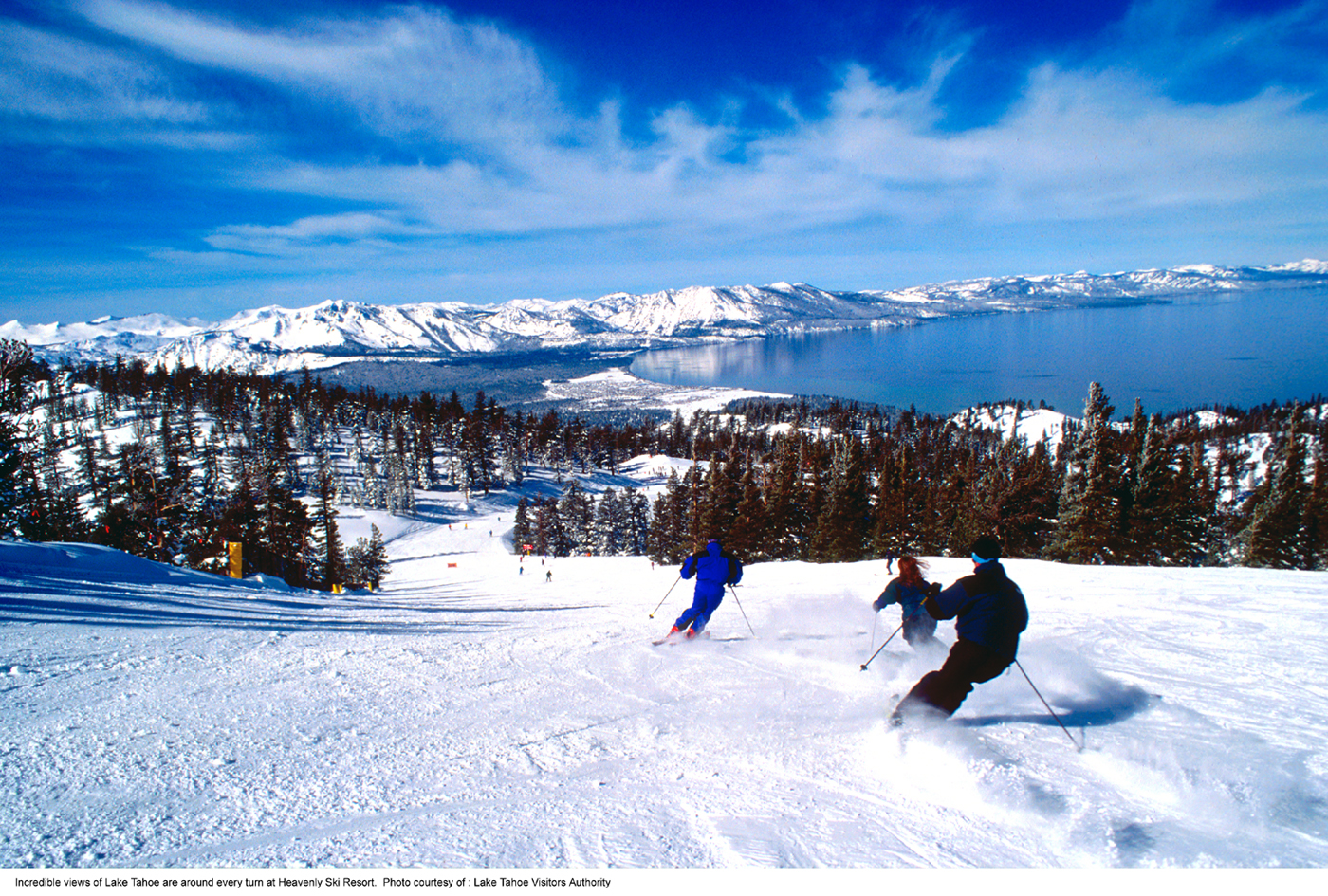
Californians never should fear being without water. Lake Tahoe holds a whopping 39 trillion gallons of water. That is enough water to flood California everywhere to a depth of 14.5 inches (36.83 cm)!

Lake Tahoe is the second deepest lake in the U.S.A. (1,645 ft; 501 m),  the 16th deepest lake on earth and the fifth deepest by average depth. Sixty-three tributaries feed the lake. 

Lake Tahoe feeds the Truckee River, which flows into Pyramid Lake, Nevada. Only one third of the water that leaves the lake leaves via the Truckee. 

Two-thirds of the water that leaves the lake gets wasted, evaporating into the air from the surface. 1,400,000 tons of water (330 million gallons; 1,249,186 kiloliters) evaporate from the surface of Lake Tahoe every day, which is enough to meet the water needs of all 3.5 million people living in Los Angeles, every day!

Meanwhile, one storm over the weekend doubled the mountain snowpack, even being labeled as "a game-changer." According to KTVU:


The snowpack in the Truckee River Basin jumped from 16 percent of normal for the date last Friday to 35 percent on Monday. Lake Tahoe Basin's went from 26 percent to 53 percent, the Carson River Basin from 31 percent to 53 percent and the Walker River Basin from 27 percent to 38 percent of normal.
Unfortunately, long ago, a U.S. Congress laid claim to 75% of the watershed of Lake Tahoe. Since then other Congresses have given management of the lake to the United States Forest Service (Lake Tahoe Basin Management Unit).

What makes Americans' food supply so resilient are futures markets for various foodstuffs. For the same, Californians should embrace a futures market for water. Having a futures market for water would keep prices steady and supply sufficient.

A continuous, open market for water contracts would assure reasonable return to capital needed to create property in water. In so doing, prices would reflect the highest, best uses, and thus achieve among other things, conservation, without the need of a heavy-handed, inept, pseudo-scientific technocratic bureaucracy. The technocrats of California with their pseudo-science have failed to protect Californians from the vagaries of nature in a way that only futures markets can. 

It is for futures markets that Americans never run out of gasoline or food. Why should Americans view water as different from these other things?

To discover a bit more about futures markets, read here: WHY FUTURES MARKETS SHOULD SET THE FEDS FUNDS RATE RATHER THAN THE FEDERAL RESERVE BOARD OF GOVERNORS

For more perpetual fear-mongering over California water, check out OH NOOOOO! MORE POLITICAL FEAR MONGERING OVER WATER AND CALIFORNIANS MEANWHILE BILLIONS OF WATER POUR INTO THE PACIFIC.
Read more ...

Thursday, January 30, 2014

BUT I SPENT 150 HOURS HANDCRAFTING THAT OIL ON CANVAS! OR THE LABORER'S SILLY THEORY OF VALUE.


The story shown in the picture below is typical of most who, though, constrained by reality, fail to see reality. Thus, they suffer. Their faces emote their anguish much like the old woman painted by the Dutch master, Rembrandt.


Though the story is touching, it's fallacy. The fallacy is Ricardo's labor causes value theory, which foolish socialists like Marx took up. The fallacy was put to bed more than 160 years ago.

Labor has nothing to do with prices. Prices get set by winning bidders. 

Take two people. One can spend one million dollars buying equipment and mining rights to mine for gold and after all that effort only find an ounce of gold. Another could find gold while walking spending exactly nothing. 

Is the ounce of gold worth a million because that is what the miner paid, what it cost him to get? No!

Right now, both the miner and the finder could get $1242.80 (as of 2014.Jan.30) for selling that ounce and that much alone. Why? The price gets set by winning bidders against all gold on offer for sale right now.

The miner put in time, effort, dedication, smarts, training, and much more. The finder put in nothing.

Or say someone has inherited purported fine-crafted gold jewelry from a dear lost relative and melted that jewelry down to support a meth habit, the gold in that jewelry would fetch at the same rate of all gold, $1242.80 an ounce. Once again, no outlay was made for that gold coming into the methhead's possession as property.

All prices adhere to the one and only true law of trade, the Law of Price — the winning bids of purchase and sale in the face of what is on offer sets the price. Prices get set by winning bidders who possess the means — these days legal tender cash or credit — in the face of what is on offer.

If no one bids for anything made, no matter how skillfully done, it's worthless. If bids are below cost, oh well. That is an signal that most everyone in a society of property deem the work worthless and a waste of resources. The artist should find other work.

Labor is the poor man's capital. The expression of skills through time, which is called work, is a product.  Labor is the outlay to turn something into property and nothing more. Only things of property can be bought and sold in purchase and sale for cash or credit.

Trade is predicated on property and profits and not effort and skill. Anyone must gain property, which is the right of ownership and never the thing owned, before enjoying or possessing a thing. If anyone fails to buy something to gain property in it, but instead takes it, that is called stealing. 

Anyone can buy stuff because that one has produced profit (earnings) in past and has been rewarded or others expect another shall produce profit in future, which we call confidence, and thus give credit to another. 

Profit arises because of property others want to possess under the constraint of the great Axiom of Profit —  the sum of sales must at least equal the cost of production, otherwise the producer goes to ruin. And of course, the sum of sales arises from the quantity of things sold times price. And price gets set by winning bidders of purchase and sale in the face of what is on offer.

So the whole trick of producing property in pursuit of profits is to produce what others want, to be in service to others. And that is what being in society of property is all about,  the only society in which strangers can live, even when government has grown to take control of that society and has distorted all relationships of man with man in society of property.

If labor were what caused price, then why can Apple earn a premium on iPhones relative to all other touch screen phones? Why aren't Apple execs accepting bids ( charging ) for what it cost them to get the phones made? 

If labor set prices because cost were to be the cause of price, then why does anyone go out of business? Labor has nothing to with price. Prices get set by winning bidders who must first gain property in something before they can use it.

No one works at a loss (Wages - Living Expenses or Sales - Outlay) unless politicians swoop in and subsidize that one with Section 8, SNAP and the like. When politicians give  workers welfare to subsidize their living, in effect, politicians subsidize firms that can pay wages precisely because of welfare given to workers (see: GREEDY CAPITALIST COMPLAINS ABOUT UNEMPLOYMENT INSURANCE EXPENSE AND QUITS HIS BUSINESS and Wile E. Coyote, Campground Businessman Super Genius).

Any worker gets paid to produce. His or her wage arises against the lack of willingness of another slightly better and smarter, who absent what she or he is doing, could bid lower than the worker being more efficient at living or could bid higher than the worker being able to produce more in any time span.

All the same, prices get set by those willing to cough up the cash or credit to buy. Sellers must accept those bids to get sales. Would-be sellers can refuse those bids and earn nothing. They can hold back inventory in hopes of future bidders bidding up prices.

People fail to appreciate the role of marketers and those in advertising who help to present products to those who most willingly can appreciate how a product can fit within their lives.

Marketers are quite like commodities speculators in the respect of pushing prices along to keep prices high enough so that manufacturers, be that automated or hand-crafted, can live to make another day, and yet against each other, low enough so that many can enjoy the fruits of others.

It's too bad that many perceive, wrongly, that marketers are "middlemen" who are little more than tricksters and knaves. Marketers keep people in business.

The successful stick to their knitting as it were and hire marketers to get them the best price possible. The reward for doing so is a share of the increase.

To savages, a Rembrandt likely would be worthless compared to spears. The savage wouldn't know he could sell the Rembrandt to someone who would esteem it and buy thousands of spears.

Yet, where art gets esteemed by others, it is the winning bidder who sets the price for a Rembrandt as nothing in trade ever can violate the Law of Price, the same as nothing can violate the Laws of Thermodynamics or the Law of Gravity. So even a one-off like a famous artwork sells, not because of purported scarcity, but because someone else has property (right of ownership) in it.

The price of a Rembrandt arises not because it is rare (scarce), but because of rivalry of bidders, only one of whom can win with the highest bid precisely because that one has the most cash or credit, which he is willing to sell in a purchase and sale, to buy a Rembrandt. 

Egghead Ph.D. academicians, who call themselves economists, long ago realized the error of Ricardo. Rightly, they came to see that labor is not the source of value (price). Yet, the next round of economists decided to commit their own fallacy and from which they base their entire myth of economics, that of scarcity and utility cause value (price). See my work WHY IS THE ECONOMY SO HORRIBLE? BECAUSE ACADEMIA ECONOMICS IS FAKE to discover in less than 3 minutes, why economics is bogus, a myth, a b.s. story.

Utility as a source of price (value) is quite false as it imbues into things intrinsic value. Scarcity as a source of price also is quite false. 

The earth is awash in water, but men are successful sellers of bottled water right next to giant lakes and rivers. Why can do they do so? Bottling creates property. 

Many would believe that a Rembrandt is worth much because he is dead and thus can not make any more. So any Rembrandt is a one-off. Yet, millions have watched and learn to paint from Bob Ross, each creating their own one-offs. Each one being unique makes each one scarce. Each Joe Blow also is a one-off. 


Yet, no one trawls garage sales bidding outrageous sums for the one-offs of the Joe Blows of our world. 

And so, because economists believe from false premises, their conclusions are false, necessarily so, even when remaining logically consistent from false premises to false conclusions. It doesn't matter if that neoclassical school is the Keynesian school or the Austrian school. 

There is no escaping reality. Anyone can only deny reality. 

Enjoy some Rembrandt!


Read more ...

Monday, August 12, 2013

WHY FUTURES MARKETS SHOULD SET THE FEDS FUNDS RATE RATHER THAN THE FEDERAL RESERVE BOARD OF GOVERNORS

Did you ever wonder why futures markets exist? Did you ever think that along with potable water, sewerage, and credit, futures markets are among mankind's greatest inventions?

There is one great, invariant law for the whole of trade — the Law of Prices. The Law of Prices holds that winning bids of purchase and sale in the face of what is on offer set the price.

There is one great, axiom for the whole of trade — the Axiom of Profit. The Axiom of Profit holds the sum of sales of winning bidders must at least equal the cost of production otherwise any producer goes to ruin.

Any farmer growing corn does not know how much rain shall fall from the sky, how hot or cold temperatures shall be, how many pests shall arise or how many farmers elsewhere on other lands shall fare during the growing season. These factors affect the supply of corn. If every farmer gains a bumper crop, there shall be an abundance of supply and thus bidders shall need to bid less to buy corn. Likewise if many crop failures arise, supply shall be dear.  Winning bidders shall need to drop much money to win.

Since no one knows the future, men can do the next best thing. They can make their plans by hedging. That is why men invented futures contracts and futures markets.

Futures contracts let someone buy or sell something for an agreed upon price on an exact agreed upon date. A futures contract, locks-in a price for something in a distant date, regardless of what actually happens between now and then. 


A futures market acts as a kind of a unseen, know-it-all god who decrees that this is the price that must exist so that winning bids of purchase and sale in the face of what is on offer can sum to be enough so that all efficient producers can remain to produce another day.

Truly, futures markets is one of the most brilliant things men have ever conceived from their minds. With many potential buyers and sellers competing freely, futures trading is a most efficient way of determining what should be the price for something.

Most fail to know that an interest rate is a price and like all prices ought to conform to the Law of Prices. Yet, one kind of interest rate, the Fed Funds Rate gets decreed by members of the Board of Governors of the Federal Reserve.

The Feds Funds Rate is an inter-bank lending rate. It is the rate that one member bank of the Federal Reserve System charges another member bank if that other member bank has sold too many loans relative to the deposits it has bought from depositors.

So in a way, the Fed Funds Rate acts as a regulator to how much credit, both revolving and non-revolving gets introduced and perpetuated into the economy. Yet there is a big problem with the Feds Funds Rate. Central bankers do not know what the rate should be. 

However, that does not stop Fed Res bankers from trying to keep the Feds Fund Rate at the rate they want. Fed Res bankers forever engage in swimming up Niagara Falls trying to repeal the natural Law of Prices.  And that is where all of the problems of our economy arise. 

How Fed Res bankers attempt to set the rate at their desired rate is through buying and selling government bonds. It is from the buying of government bonds that lets politicians spend money not collected in taxes and not seen as prudent by private bond buyers. So Fed Res bankers help politicians engage in unnecessary wars and build bridges to nowhere. 

If ever Americans want to return to freedom, to live among a people where those who get rich do so from earnest effort rather than political connection, here is where true change must arise. Fed Res bankers ought to be prohibited from buying government bonds. Even better, the Fed Funds Rate ought to be set in a futures market rather than by the wrong decisions of a handful of men led by the Chairman of the Federal Reserve.

Instead Congress requires Fed Res bankers to collateralize each dollar in circulation. Fed Res bankers do so mostly with bonds from Congress and its various agencies.

It was the wrong setting of the Fed Funds Rate, led by then chairman Alan Greenspan that led to the banking crisis of 2007 (and no, it wasn't any other kind of crisis).

Futures markets exist that set the price of many things, like butter, orange juice, gasoline, coffee, natural gas, silver, gold, oats, corn, soybeans, wheat, copper, lumber, sugar, foreign money like yen, Euros, Aussie dollars, Norwegian Krone. There are even futures markets to price hurricane damage to a certain geographical area using the Chicago Mercantile Exchange Hurricane Index and to price the the amount of snow or rain that falls in a specific area designated by a major airport in a city.

In the 21st century, there is no justifiable reason to have the Feds Funds Rate set by a small group of stodgy know-nothings (currently led by chairman know-nothing Ben Bernanke) rather than by the wisdom of thousands of market participants.

With interest rates set by a futures market, Americans would gain for themselves the right supply of bank credit into the economy so that sound economic growth could arise. It is likely that a futures market Feds Fund Rate would put an end to the endless cycle of recessions and crazy bubbles like the realty bubble of the 2000s. 

It is my belief that a futures market for Feds Fund Rate is an original idea. I am not aware of anyone on earth who has proposed so either publicly or privately. 
Read more ...