For years, the foolish have parroted a thoroughly wrong story that Iggy Pop was a punk rocker and thus "the godfather" of punk rockers. Claiming Iggy Pop was a punk rocker is little more than historical revisionism in the annuals of rock and roll journalism.

Beginning with Pet Sounds (♫) by The Beach Boys (1966), musicians began to drift away from the rules of rock and roll. The Beatles, June 1, 1967, work, Sgt. Pepper's Lonely Hearts Club Band ushered in progressive rock, a kind of music that resembles rock and roll but it isn't. The progressive rock movement likely peaked March 1, 1973, with Pink Floyd's release of Dark Side of the Moon (♫).
 James Osterberg (aka Iggy Pop) formed the also-ran Psychedelic Stooges (♫) in 1967 after seeing The Doors play at the University of Michigan. Joining Osterberg were brothers Ron (guitar) and Scott Asheton (drums) and Dave Alexander (bass).
Osterberg sought to be a Jim Morrison clone. After a year, the band signed a deal with Elektra, the same label as the band he idolized, The Doors.
The entire first recording by The Stooges, released in 1969, titled The Stooges, is little more than the work of clones in love with psychedelia long-form prog rock that many call acid rock. They tried hard to sound like Cream (No Fun, Real Cool Time) , The Doors (We Will Fall, Ann), Pink Floyd with Syd Barrett playing Interstellar Overdrive (♫) (I Wanna Be Your Dog, Not Right) or the Yardbirds (1969, Little Doll).
The entire second recording by The Stooges, Fun House released in 1970, is little more than yet another work of clones in love with psychedelia long-form prog rock. For this recording, The Stooges become a cover band of Steppenwolf (Down on the Street, Loose, TV Eye), The Doors (Dirt, Fun House) and Cream (1970). L.A. Blue is noise experimentation.
The Stooges were a bad also-ran who mimicked the prog rock sounds of Cream, The Doors, the later Yardbirds, Pink Floyd with Syd Barrett and Steppenwolf. The Stooges weren't reacting against progressive rock. Iggy and his bandmates embraced it! The Stooges were the anti-thesis of those who would become punk rockers.
After two lame L.P.s with little sales, and Iggy's bad heroin habit, Elektra execs dropped The Stooges in 1971. The Stooges became a bar band, adding James Williamson on guitar, kicking out drunk bassist Dave Alexander and adding bassist Jimmy Recca.
Those who were born around the birth of rock and roll (see: A COUPLE OF AMERICAN JEWS INVENTED ROCK AND ROLL IN 1952) and who were coming of age between 1970 and 1972 rejected the progressive rock sound and its demands of virtuosity. They longed to play the music they knew when that had between released before 1966.
Many took up instruments and began playing rock and roll again in defiance of the trend of progressive rock from the UK played by bands like Pink Floyd, King Crimson, Yes, Jethro Tull, Led Zeppelin, Emerson, Lake & Palmer, as well as the soft rock pop mostly coming from Los Angeles (The Eagles, Linda Rondstadt, others).
Punk rockers arose in backlash against the overblown, pretentious, pompousness of prog rock musicians in what became the first great rock and roll revival. The revival tossed away the need for virtuousity and all of its entrapment — instruments from symphonic music along with music synthesizers, music derived from orchestral music and jazz as well as music written with complex meter, contrapuntal bass, and extended musical passages.
Punk rockers played rock and roll. Rock and roll is a kind of music. It consists of these elements:
• simple meter (4/4)
• ostinato (riff)
• 3 chords or 4 chords resolving on the tonic with the 4-chord pattern adding the submediant to the tonic, subdominant, and dominant
• electric guitar, electric bass, drums, and often vocal accompaniment, and sometimes upright piano
Punk rocker sang songs with lyrics reflected the reality of the times. They eschewed the fantasy of Utopian ideals of prog rock lyrics.
Punk rockers first appeared in New York City in 1972. Punk rockers created the great rock and roll revival. No band formed, signed and recorded before 1972 ever could be considered as being in the vanguard of the great rock and roll revival known as the New Wave and later by many as Punk Rock.
 The band that kicked off the rock and roll revival were the New York Dolls. In 1972, New York Dolls became the must-see band in New York City.
New York Dolls were the first punk rockers. Everyone in NYC and the UK took their cues from New York Dolls.
When the Dolls hit, they were called punks. They were lambasted by music journalists and mocked by television presenters as "mock rock" (watch). And then everyone copied them.
Even Iggy Pop was hanging out in New York in 1972, watching the New York Dolls and learning from them as his handler and new friend David Bowie was doing. Like everyone else, in 1972, Bowie became swooped up into the New York Dolls gravity. Sable Starr, the infamous groupie and Iggy's girlfriend who came with Iggy, dumped Iggy and took up with Johnny Thunders of the New York Dolls.
 With his Mainman Productions firm, Bowie took on Iggy and Lou Reed and brought them to the UK to resurrect their failed careers. In 1972, while Iggy was in the UK with Bowie, the Dolls went to the UK and toured.
A bidding war among record labels broke out and then Dolls drummer Billy Murcia died from a drugs misadventure. Bowie wrote about this for his song, Time (♫), which he released on his LP Aladdin Sane, April 13, 1973:
In early 1973, after the death of Murcia, the Dolls signed with Mercury, recorded again all their material already having been recorded once before in 1972 and released their debut L.P. on July 27, 1973. New York Dolls went back to the UK, appeared on BBC 2 Top of the Pops (♫). The Dolls TV appearance truly launched the punk rocker movement in the UK.
The New York Dolls recorded 21 songs released on two records, the self-titled first release and the second release titled Too Much Too Soon. Of the 21 songs, David Johansen and Johnny Genzale (Johnny Thunders) co-wrote nine. Johansen with Sylvain Mizrahi (Sylvain Sylvain) wrote three, Johansen with Arthur Kane wrote one. Thunders alone wrote one and Johansen alone wrote one. In total, band members wrote 16 of 21 songs, which is a bit more than 72.2%.
The remaining songs were covers (23.8%):
In total the band recorded 26 songs, of which one or more members wrote 17. Of the nine covers recorded (34.6%), not one cover was a song written by The Stooges or by Iggy and the Stooges.
The covers were written by pop song writers (Shuman, Pomus, Lieber, Stoller, Morton, Gamble, Huff), rhythm and blues guys (Dixon, Williamson II, Lieber, Stoller, Johnson and Smith) and rock and rollers (Berry, Diddley). The covers reveal an influence of pop music rooted in rhythm and blues. None of the songs songs reveal any influence of psychedelic prog rock favored by The Stooges.
Principal song writer Johnny Thunders went on to record these:
Thunders was known to have played live (I'm Not Your) Steppin' Stone by Tommy Boyce and Bobby Hart (perfomred by Paul Revere and The Raiders) (♫), Don't Mess With Cupid by Steve Cropper, Eddie Floyd and Deanie Parker (performed by Otis Redding) (♫), Stray Cat Blues by Mick Jagger and Keith Richards (♫).
When asked about influences, Thunders mentioned The Ventures (♫) and Hubert Sumlin (♫). Clearly, Thunders' covers reveal influence from rock & roll from the late 1950s and early 1960s. If anything, Thunders guitar playing has more in common with Pat Hare (♫), Joe Hill Louis (♫), Goree Carter (♫), Pee Wee Crayton (♫)and Billy Lee Riley (♫).
Thunders never mentioned Ron Asheton from The Stooges. And no one had yet heard of James Williamson by the time the New York Dolls recorded. Williamson didn't play with Iggy until the Raw Power recording, by which time, the New York Dolls had been long established.
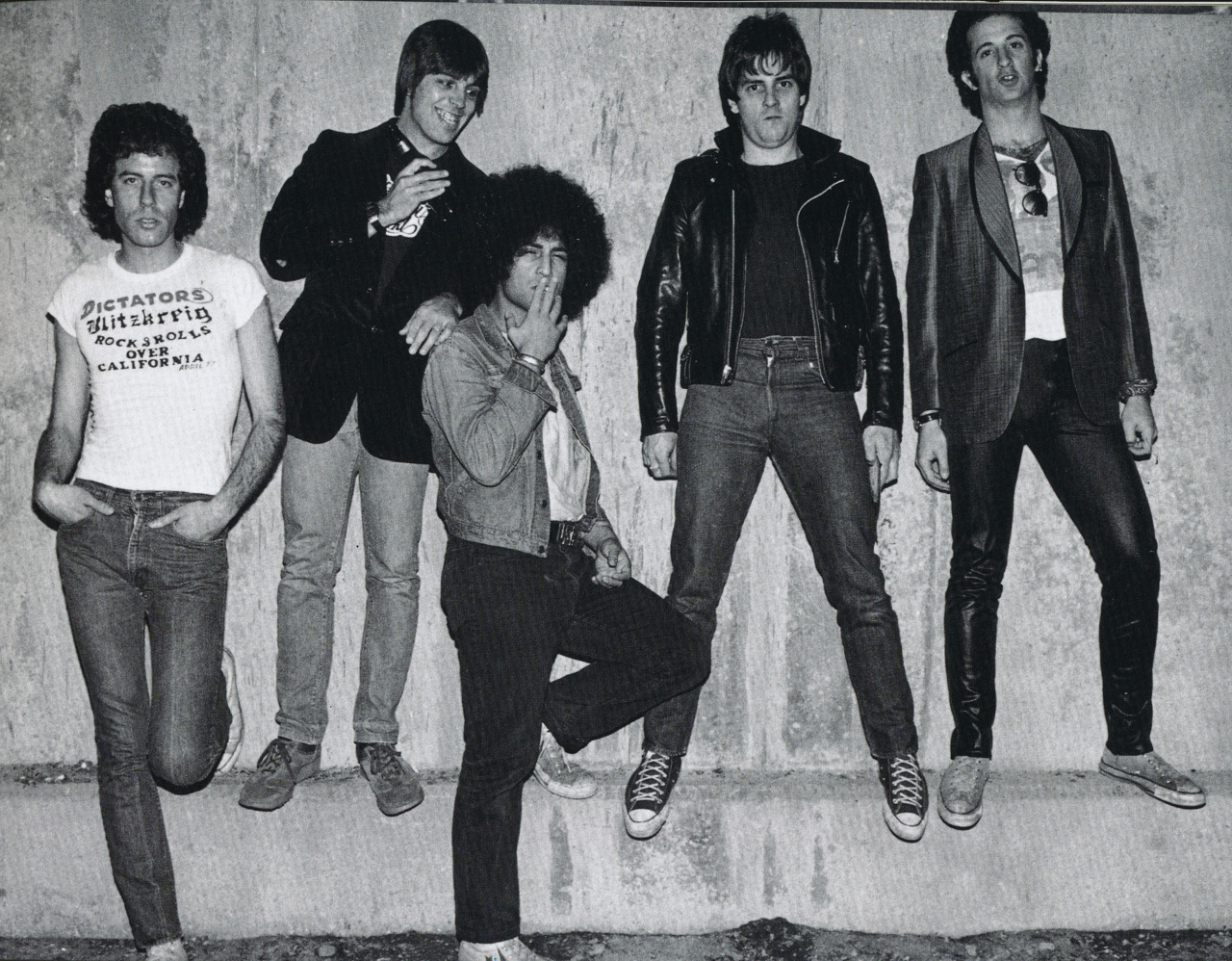
Meanwhile, The Dictators (♫), guys from the borough of Queens, New York City, formed in 1973 while attending college in upstate New York (SUNY College at New Paltz). They began playing at The Coventry in Queens in 1974 and had a recording deal by 1975.

Epic execs released The Dictators Go Girl Crazy! (♫) in 1975. They were the first NYC act to get a deal, record and release after New York Dolls. On their first release, The Dictators covered California Sun (♫). Epic execs dropped The Dictators in 1976.
In 1977, The Dictators signed with Asylum and released their second LP Manifest Destiny (♫). The Dictators already established themselves in 1975 and were in the vanguard of the great rock and roll revival. Andy Shernoff founded The Dictators for that exact purpose.
In 1976, The Ramones released Ramones (♫). Both Douglas Colvin (Dee Dee Ramone) and Jeffrey Hyman (Joey Ramone) had been fan regulars of The Dictators. Joey and Andy Shernoff, the band leader of The Dictators became life-long friends. On the second LP by The Ramones, like The Dictators before them, The Ramones also covered California Sun (♫).
Though they weren't the first punk rockers, many believe The Ramones were. And once D.J. John Peel aired The Ramones first LP on May 19, 1976, in the UK it was all over.
Watch what John Cummings (Johnny Ramone) said who influenced him and how he started playing.
Not six minutes into the video, Johnny Ramone says,
Later in the same interview, Johnny said the Beach Boys were his favorite followed by The Doors.
As far as the rest of The Ramones go, Joey Ramone in his later years, after The Ramones long had folded, can be seen saying he liked The Stooges. Dee Dee Ramone who wrote or co-wrote most of their songs cited The Beatles as his biggest influence.
The Ramones released 54 songs on their first four recordings, the ones that matter. They covered five songs:
None of their covers reveal any influence by The Stooges or Iggy and the Stooges.
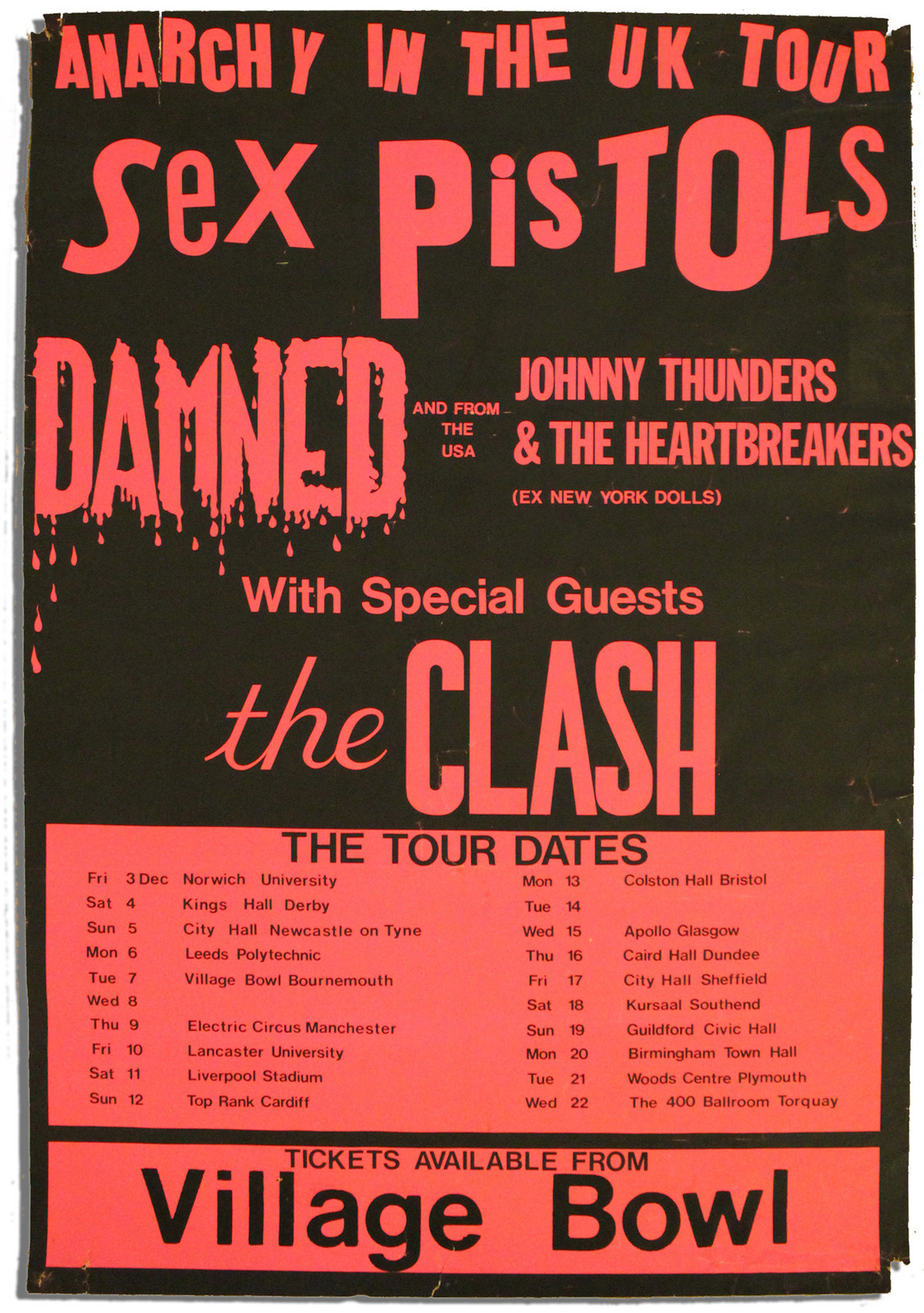 The Sex Pistols (♫) were a clone band created by Malcolm McClaren to help him sell clothes from his clothing shop. McClaren modeled the Sex Pistols from the New York Dolls (see: LISTEN UP BRITS. YOU DIDN'T INVENT PUNK ROCK, BUT YOUR DULL BANDS LIKE LED ZEPPELIN SPARKED A ROCK AND ROLL REVOLT).
Here is what those involved with the Sex Pistols had to say.
"The Sex Pistols were identical to the New York Dolls ... and they were identical in terms of their actions." ~Malcolm McClaren, creator of The Sex Pistols
Afterward, in the spring of 1977, the Sex Pistols went into a recording studio and produced the songs that would be included in their first and only L.P., Never Mind the Bollocks (♫), Here's the Sex Pistols. Anyone who gives a listen to the Sex Pistols song Liar (♫) and then listens to the New York Dolls song Puss N' Boots (♫) can hear how Jones stole from Thunders note-for-note.
In the years leading up to the New York Dolls, most musicians would cite Chuck Berry (♫), Eddie Cochran (♫), The Kinks (♫), The Rolling Stones (♫), The Who (♫), Eric Clapton with Cream (♫) and Jimi Hendrix (♫) as their influences.
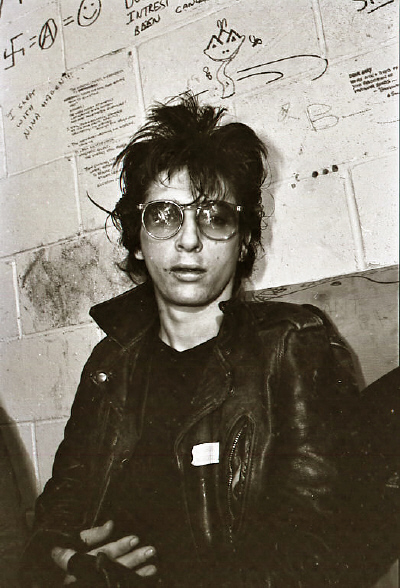 Countless guitarists in recordings from 1976, 1977 and 1978, copied the licks of Johnny Thunders of New York Dolls and after the Dolls broke up in 1975, his playing with his band The Heartbreakers. As well countless others copied licks played by Ross Friedman (aka Ross the Boss, aka Ross Funicello) from the The Dictators.
None of the rock and roll revival guitarists copied his sound from either Ron Asheton or James Willamson . No band copied their sound from either The Stooges or from Iggy and The Stooges.
Those who claim The Stooges were the source from which punk rockers sprang must reveal to the world answers for these questions:
All known covers of The Stooges, a sure-fire way of telling "influence" happened after 1976, four years after the great rock and roll revival was in full swing. Here are the earliest covers of songs by The Stooges:
Sid Vicious, the substitute bass player in Sex Pistols, a guy who couldn't play at all, covered one song by The Stooges (I Wanna Be Your Dog) and one by Iggy and Stooges (Search and Destroy) for his December 1979 release Sid Sings.
Notably, the already established punk rockers, The Dictators were the first band to cover Search and Destroy (♫). The Dictators released their version on their second LP, Manifest Destiny. Notably too is the superior musicianship heard in the Dictators' performance.
In a September 20, 2007, interview between Jack Rabid of Spin Magazine and John Lydon (aka Johnny Rotten) of the Sex Pistols, Rabid talked with Lydon about Johnny Thunders.

Undeniable facts remain:
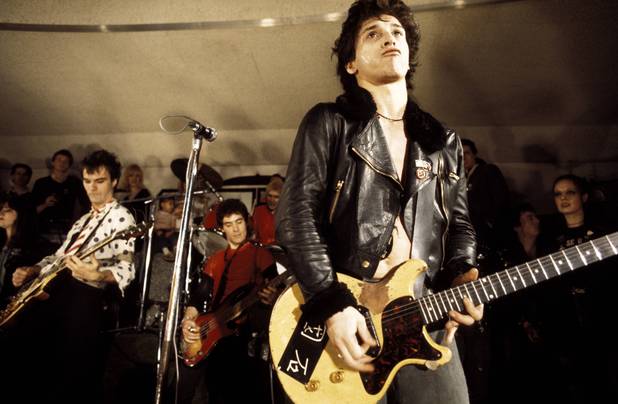
The Stooges were a quite unoriginal psychedelic prog rock band, hence their original name, Psychedelic Stooges. Without doubt, The Stooges played a bad version of psychedelic prog rock.
Watch the supposed godfather of punk, Iggy Pop, during the height of the great rock and roll revival talk about his failed career and his quest for fame and riches — two quite un-punkish qualities.
And then from the same video, watch Iggy Pop put on a psychedelic rock clone performance of Jim Morrison, his idol. The video is cued up to the performance.
Within the last 39 years or so, a wrong story has cropped up claiming there was such thing as proto-punk in a lame effort to try to connect Iggy Pop and his lame psychedelic prog rock with the great rock and roll revival. Sadly, many have parroted the false story. And even more have believed it.
It's a big lie to say Iggy Pop, The Stooges or Iggy Pop and The Stooges had anything to do with the great rock and roll revival. The Stooges didn't even try to play rock and roll.
David Bowie, likely who was Iggy's lover at the time, co-wrote most songs on Lust for Life, which no one could call a comeback L.P. Instead it was a last shot at staying in the music business effort L.P.
No one who grew up in the New Wave of Music era with all the punk rockers ever connected either The Stooges or Iggy and the Stooges with bands like The Heartbreakers, The Clash, Sex Pistols and so on. When Lust for Life hit the radio, most thought "Once been, has been". Iggy Pop wasn't even half as interesting as Ian Dury and the Blockheads.
A great marketing machine has pushed a false meme that Iggy Pop is the godfather of punk. If anything, The Stooges were among the last of many easily forgotten fuzz-tone psychedelic clone bands and Osterberg was their front man. Afterward he was a David Bowie guy pal who hung around New York City with David Bowie as Bowie became enamored with The New York Dolls.
Even Iggy himself tried to steer all way from the claim that he is the godfather of punk. Back on May 25, 2013, the New Musical Expressed published a work that quote Osterberg,
Enjoy the band that kicked off the rock and roll revival, the quite original New York Dolls led by Johnny Thunders.
And then enjoy the magic of Johnny Thunders with Jerry Nolan, Walter Lure and Billy Rath, all playing as The Heartbreakers.
Read more ...

Beginning with Pet Sounds (♫) by The Beach Boys (1966), musicians began to drift away from the rules of rock and roll. The Beatles, June 1, 1967, work, Sgt. Pepper's Lonely Hearts Club Band ushered in progressive rock, a kind of music that resembles rock and roll but it isn't. The progressive rock movement likely peaked March 1, 1973, with Pink Floyd's release of Dark Side of the Moon (♫).
James Osterberg (aka Iggy Pop) formed the also-ran Psychedelic Stooges (♫) in 1967 after seeing The Doors play at the University of Michigan. Joining Osterberg were brothers Ron (guitar) and Scott Asheton (drums) and Dave Alexander (bass).Osterberg sought to be a Jim Morrison clone. After a year, the band signed a deal with Elektra, the same label as the band he idolized, The Doors.
The entire first recording by The Stooges, released in 1969, titled The Stooges, is little more than the work of clones in love with psychedelia long-form prog rock that many call acid rock. They tried hard to sound like Cream (No Fun, Real Cool Time) , The Doors (We Will Fall, Ann), Pink Floyd with Syd Barrett playing Interstellar Overdrive (♫) (I Wanna Be Your Dog, Not Right) or the Yardbirds (1969, Little Doll).
The entire second recording by The Stooges, Fun House released in 1970, is little more than yet another work of clones in love with psychedelia long-form prog rock. For this recording, The Stooges become a cover band of Steppenwolf (Down on the Street, Loose, TV Eye), The Doors (Dirt, Fun House) and Cream (1970). L.A. Blue is noise experimentation.
The Stooges were a bad also-ran who mimicked the prog rock sounds of Cream, The Doors, the later Yardbirds, Pink Floyd with Syd Barrett and Steppenwolf. The Stooges weren't reacting against progressive rock. Iggy and his bandmates embraced it! The Stooges were the anti-thesis of those who would become punk rockers.
After two lame L.P.s with little sales, and Iggy's bad heroin habit, Elektra execs dropped The Stooges in 1971. The Stooges became a bar band, adding James Williamson on guitar, kicking out drunk bassist Dave Alexander and adding bassist Jimmy Recca.
Those who were born around the birth of rock and roll (see: A COUPLE OF AMERICAN JEWS INVENTED ROCK AND ROLL IN 1952) and who were coming of age between 1970 and 1972 rejected the progressive rock sound and its demands of virtuosity. They longed to play the music they knew when that had between released before 1966.
Many took up instruments and began playing rock and roll again in defiance of the trend of progressive rock from the UK played by bands like Pink Floyd, King Crimson, Yes, Jethro Tull, Led Zeppelin, Emerson, Lake & Palmer, as well as the soft rock pop mostly coming from Los Angeles (The Eagles, Linda Rondstadt, others).
Punk rockers played rock and roll. Rock and roll is a kind of music. It consists of these elements:
• simple meter (4/4)
• ostinato (riff)
• 3 chords or 4 chords resolving on the tonic with the 4-chord pattern adding the submediant to the tonic, subdominant, and dominant
• electric guitar, electric bass, drums, and often vocal accompaniment, and sometimes upright piano
Punk rocker sang songs with lyrics reflected the reality of the times. They eschewed the fantasy of Utopian ideals of prog rock lyrics.
Punk rockers first appeared in New York City in 1972. Punk rockers created the great rock and roll revival. No band formed, signed and recorded before 1972 ever could be considered as being in the vanguard of the great rock and roll revival known as the New Wave and later by many as Punk Rock.
The band that kicked off the rock and roll revival were the New York Dolls. In 1972, New York Dolls became the must-see band in New York City.New York Dolls were the first punk rockers. Everyone in NYC and the UK took their cues from New York Dolls.
When the Dolls hit, they were called punks. They were lambasted by music journalists and mocked by television presenters as "mock rock" (watch). And then everyone copied them.
Even Iggy Pop was hanging out in New York in 1972, watching the New York Dolls and learning from them as his handler and new friend David Bowie was doing. Like everyone else, in 1972, Bowie became swooped up into the New York Dolls gravity. Sable Starr, the infamous groupie and Iggy's girlfriend who came with Iggy, dumped Iggy and took up with Johnny Thunders of the New York Dolls.
A bidding war among record labels broke out and then Dolls drummer Billy Murcia died from a drugs misadventure. Bowie wrote about this for his song, Time (♫), which he released on his LP Aladdin Sane, April 13, 1973:
Time - In Quaaludes and red wine, demanding Billy Dolls and other friends of mine. Take your time.In 1972, with David Bowie as producer, Iggy, Williamson and the Asheton brothers recorded a hard rock LP for Columbia, Raw Power, an LP that sounded nothing like the music that would come from the great rock and roll revival. Within a year after poor sales and public disinterest, the renamed Iggy and the Stooges were dropped by Columbia records execs.
In early 1973, after the death of Murcia, the Dolls signed with Mercury, recorded again all their material already having been recorded once before in 1972 and released their debut L.P. on July 27, 1973. New York Dolls went back to the UK, appeared on BBC 2 Top of the Pops (♫). The Dolls TV appearance truly launched the punk rocker movement in the UK.
The New York Dolls recorded 21 songs released on two records, the self-titled first release and the second release titled Too Much Too Soon. Of the 21 songs, David Johansen and Johnny Genzale (Johnny Thunders) co-wrote nine. Johansen with Sylvain Mizrahi (Sylvain Sylvain) wrote three, Johansen with Arthur Kane wrote one. Thunders alone wrote one and Johansen alone wrote one. In total, band members wrote 16 of 21 songs, which is a bit more than 72.2%.
The remaining songs were covers (23.8%):
- Pills by Bo Diddley (♫)
- Stranded in the Jungle by James Johnson and Ernestine Smith (performed by The Cadets) (♫)
- (There's Gonna Be A) Showdown by Kenny Gamble and Leon Huff (performed by Archie Bell and the Drells) (♫)
- Bad Detective by Jerry Leiber & Mike Stoller (performed by The Coasters) (♫)
- Don't Start Me Talkin' by Sonny Boy Williamson II (♫)
- Seven Day Weekend by Doc Pomus and Mort Shuman (performed by Gary U.S. Bonds) (♫)
- Back in the U.S.A. by Chuck Berry (♫)
- (I'm Your) Hoochie Coochie Man by Willie Dixon (♫)
- Great Big Kiss by George "Shadow" Morton (performed by The Shangri-Las) (♫)
In total the band recorded 26 songs, of which one or more members wrote 17. Of the nine covers recorded (34.6%), not one cover was a song written by The Stooges or by Iggy and the Stooges.
The covers were written by pop song writers (Shuman, Pomus, Lieber, Stoller, Morton, Gamble, Huff), rhythm and blues guys (Dixon, Williamson II, Lieber, Stoller, Johnson and Smith) and rock and rollers (Berry, Diddley). The covers reveal an influence of pop music rooted in rhythm and blues. None of the songs songs reveal any influence of psychedelic prog rock favored by The Stooges.
Principal song writer Johnny Thunders went on to record these:
- Pipeline by Brian Carman and Bob Spickard while they were in The Chantays (♫)
- Daddy Rollin' Stone by Otis Blackwell and Sonny Thompson (♫)
- Que Sera, Sera (Whatever Will Be, Will Be) by Ray Evans and Jay Livingston (performed by The Chordettes) (♫)
Thunders was known to have played live (I'm Not Your) Steppin' Stone by Tommy Boyce and Bobby Hart (perfomred by Paul Revere and The Raiders) (♫), Don't Mess With Cupid by Steve Cropper, Eddie Floyd and Deanie Parker (performed by Otis Redding) (♫), Stray Cat Blues by Mick Jagger and Keith Richards (♫).
When asked about influences, Thunders mentioned The Ventures (♫) and Hubert Sumlin (♫). Clearly, Thunders' covers reveal influence from rock & roll from the late 1950s and early 1960s. If anything, Thunders guitar playing has more in common with Pat Hare (♫), Joe Hill Louis (♫), Goree Carter (♫), Pee Wee Crayton (♫)and Billy Lee Riley (♫).
Thunders never mentioned Ron Asheton from The Stooges. And no one had yet heard of James Williamson by the time the New York Dolls recorded. Williamson didn't play with Iggy until the Raw Power recording, by which time, the New York Dolls had been long established.
Epic execs released The Dictators Go Girl Crazy! (♫) in 1975. They were the first NYC act to get a deal, record and release after New York Dolls. On their first release, The Dictators covered California Sun (♫). Epic execs dropped The Dictators in 1976.
In 1977, The Dictators signed with Asylum and released their second LP Manifest Destiny (♫). The Dictators already established themselves in 1975 and were in the vanguard of the great rock and roll revival. Andy Shernoff founded The Dictators for that exact purpose.
In 1976, The Ramones released Ramones (♫). Both Douglas Colvin (Dee Dee Ramone) and Jeffrey Hyman (Joey Ramone) had been fan regulars of The Dictators. Joey and Andy Shernoff, the band leader of The Dictators became life-long friends. On the second LP by The Ramones, like The Dictators before them, The Ramones also covered California Sun (♫).
Though they weren't the first punk rockers, many believe The Ramones were. And once D.J. John Peel aired The Ramones first LP on May 19, 1976, in the UK it was all over.
Watch what John Cummings (Johnny Ramone) said who influenced him and how he started playing.
"I saw the New York Dolls, me and Tommy and Dee Dee ... I saw Johnny Thunders in a club and I thought, 'Wow, this guy looks really cool.' I said to Tommy, "This guy looks too cool. He has to have something here." I went to see the band and I thought they were really good, really entertaining and I said, 'You know, I could do that too.'"And there you go, Johnny Ramone in public on video said that Johnny Thunders and the New York Dolls inspired him to pick up the guitar and play rock and roll.
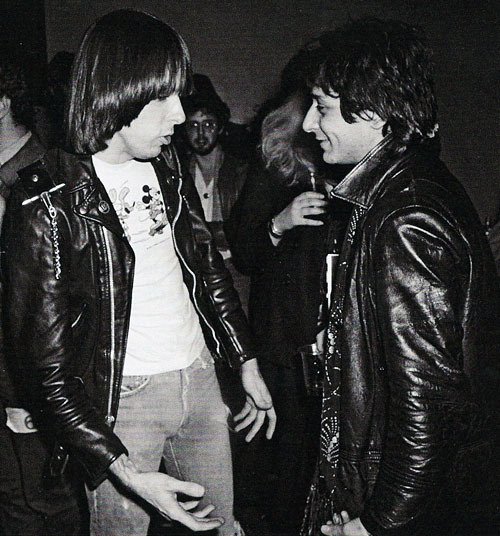 |
| Johnny Ramone talking with Johnny Thunders |
"Oh, yeah, I would review everyone, you know, where our competition lied. You know, The Heartbreakers were the only other band I looked upon as, these guys are really good, but they were a bunch of junkies. So, I don't have to worry about them because their career is going to be short. You know.
That was the only other band I was concerned about.That was the next best band."The Heartbreakers (♫) were founded by ex-New York Dolls guitarist Johnny Thunders and ex-New York Dolls drummer Jerry Nolan. Thunders and Nolan started The Heartbreakers after the New York Dolls folded in 1975.
Later in the same interview, Johnny said the Beach Boys were his favorite followed by The Doors.
As far as the rest of The Ramones go, Joey Ramone in his later years, after The Ramones long had folded, can be seen saying he liked The Stooges. Dee Dee Ramone who wrote or co-wrote most of their songs cited The Beatles as his biggest influence.
The Ramones released 54 songs on their first four recordings, the ones that matter. They covered five songs:
- Let's Dance by Jim Lee (performed by Chris Montez) (♫)
- California Sun by Henry Glover and Morris Levy (performed by The Rivieras) (♫)
- Do You Wanna Dance? by Bobby Freeman (performed by The Beach Boys) (♫)
- Surfin' Bird by Al Frazier, Sonny Harris, Carl White and Turner Wilson (performed by The Trashmen) (♫)
- Needles and Pins by Sonny Bono and Jack Nitzsche (performed by The Searchers) (♫)
None of their covers reveal any influence by The Stooges or Iggy and the Stooges.
The Sex Pistols (♫) were a clone band created by Malcolm McClaren to help him sell clothes from his clothing shop. McClaren modeled the Sex Pistols from the New York Dolls (see: LISTEN UP BRITS. YOU DIDN'T INVENT PUNK ROCK, BUT YOUR DULL BANDS LIKE LED ZEPPELIN SPARKED A ROCK AND ROLL REVOLT).Here is what those involved with the Sex Pistols had to say.
"The Sex Pistols were identical to the New York Dolls ... and they were identical in terms of their actions." ~Malcolm McClaren, creator of The Sex Pistols
"I was trying to do with the Sex Pistols what I had failed with the New York Dolls" ~Malcolm McClaren, creator of The Sex Pistols
"I thought it was great [New York Dolls first recording], just the rawness of it. And y'know Thunders guitar was what I really dug at the time." ~ Steve Jones, guitarist of The Sex PistolsThe Sex Pistols released their first song, Anarchy in the U.K. (♫) on November 26, 1976. Beginning early December 1976, along with Johnny Thunders and The Heartbreakers and The Clash, the Sex Pistols went on an ill-fated Anarchy Tour to promote the song.
Afterward, in the spring of 1977, the Sex Pistols went into a recording studio and produced the songs that would be included in their first and only L.P., Never Mind the Bollocks (♫), Here's the Sex Pistols. Anyone who gives a listen to the Sex Pistols song Liar (♫) and then listens to the New York Dolls song Puss N' Boots (♫) can hear how Jones stole from Thunders note-for-note.
In the years leading up to the New York Dolls, most musicians would cite Chuck Berry (♫), Eddie Cochran (♫), The Kinks (♫), The Rolling Stones (♫), The Who (♫), Eric Clapton with Cream (♫) and Jimi Hendrix (♫) as their influences.
Countless guitarists in recordings from 1976, 1977 and 1978, copied the licks of Johnny Thunders of New York Dolls and after the Dolls broke up in 1975, his playing with his band The Heartbreakers. As well countless others copied licks played by Ross Friedman (aka Ross the Boss, aka Ross Funicello) from the The Dictators.None of the rock and roll revival guitarists copied his sound from either Ron Asheton or James Willamson . No band copied their sound from either The Stooges or from Iggy and The Stooges.
Those who claim The Stooges were the source from which punk rockers sprang must reveal to the world answers for these questions:
- What song did the New York Dolls record that sounds derivative of The Stooges?
- What song recorded by the New York Dolls has Johnny Thunders playing a run, lick or chord progression that he lifted from Ron Asheton?
- On what song by The Ramones can we hear Johnny Ramone playing any guitar lick that sounds like what Ron Asheton played?
- On what song by The Ramones can we hear Dee Dee Ramone play any bass line that sounds like what Dave Alexander played?
All known covers of The Stooges, a sure-fire way of telling "influence" happened after 1976, four years after the great rock and roll revival was in full swing. Here are the earliest covers of songs by The Stooges:
- 1970 (titled as I Feel Alright) by The Damned, February 18, 1977
- T.V. Eye by Radio Birdman, June 1977
- No Fun by Sex Pistols, July 2, 1977
Sid Vicious, the substitute bass player in Sex Pistols, a guy who couldn't play at all, covered one song by The Stooges (I Wanna Be Your Dog) and one by Iggy and Stooges (Search and Destroy) for his December 1979 release Sid Sings.
Notably, the already established punk rockers, The Dictators were the first band to cover Search and Destroy (♫). The Dictators released their version on their second LP, Manifest Destiny. Notably too is the superior musicianship heard in the Dictators' performance.
In a September 20, 2007, interview between Jack Rabid of Spin Magazine and John Lydon (aka Johnny Rotten) of the Sex Pistols, Rabid talked with Lydon about Johnny Thunders.

Rabid: Steve Jones has said he borrowed from New York Doll Johnny Thunders’ playing.
Lydon: Yeah, because Thunders would be playing with three strings and a bit of elephant rope. Anything that was available — that was a punk ethos. We came from something. We’re not just impossibly out of thin air.
Rabid: Of course, you wrote “New York,” the funniest song ever written about Johnny Thunders.
Lydon: Yeah. Done in the greatest possible taste! [Laughs] It’s a fun song, but it was taken as a bitter retort — it was far from it. It was accolades, is what it was!In a February 28, 2011, interview with someone at ultimateguitar.com, Sylvain Sylvain of the New York Dolls had this to say this about Iggy Pop when he asked about whether he sensed the coming of the rock and roll revival:
"Oh, god, yes. I mean it was just taking birth and it was movin' so fast and I knew for a fact that the New York Dolls was ground zero for all of that, which really made me so proud. When it all kicked through and especially once we got our recording deal, which took three years probably.
"No, the bands got created around us. The first band that was ever there in New York City and the first band ever was the New York Dolls. And I'm not talking about Iggy Pop because he was a 60s band; he was a late 60s and the MC5, those guys were from the late 60s.
"In fact, the New York Dolls re-hatched Iggy's career. He went on the road with us in 1973 playing little theaters all around the country from Detroit onto California. He played with us at the [Hollywood] Palladium in Los Angeles actually where Iggy Pop opens up for the New York Dolls.
"That's what was going on. Iggy was sleeping in Johnny's room at the Ramada Inn. I'm not kidding."
 |
| Don't you know where to cop? That's what New York Johnny [Thunders] said. "You should get to know your town just like I know mine." ~ Joe Strummer, lyrics City of the Dead released as the B-side to the single Complete Control, September 23,1977 |
- Johnny Thunders, the principal song co-writer and lead guitarist for the New York Dolls, learned no guitar methods from Ron Asheton.
- The New York Dolls launched the great rock and roll revival that many later would call the New Wave as well as punk rock.
- Johnny Ramone saw the New York Dolls and specifically was inspired by Johnny Thunders to pick up the guitar and form a band with Dee Dee Ramone.
- Iggy Pop tried to resurrect his failed career by riding the coattails of the New York Dolls as he slept on Johnny Thunders floor.
Watch the supposed godfather of punk, Iggy Pop, during the height of the great rock and roll revival talk about his failed career and his quest for fame and riches — two quite un-punkish qualities.
And then from the same video, watch Iggy Pop put on a psychedelic rock clone performance of Jim Morrison, his idol. The video is cued up to the performance.
Within the last 39 years or so, a wrong story has cropped up claiming there was such thing as proto-punk in a lame effort to try to connect Iggy Pop and his lame psychedelic prog rock with the great rock and roll revival. Sadly, many have parroted the false story. And even more have believed it.
It's a big lie to say Iggy Pop, The Stooges or Iggy Pop and The Stooges had anything to do with the great rock and roll revival. The Stooges didn't even try to play rock and roll.
David Bowie, likely who was Iggy's lover at the time, co-wrote most songs on Lust for Life, which no one could call a comeback L.P. Instead it was a last shot at staying in the music business effort L.P.
No one who grew up in the New Wave of Music era with all the punk rockers ever connected either The Stooges or Iggy and the Stooges with bands like The Heartbreakers, The Clash, Sex Pistols and so on. When Lust for Life hit the radio, most thought "Once been, has been". Iggy Pop wasn't even half as interesting as Ian Dury and the Blockheads.
A great marketing machine has pushed a false meme that Iggy Pop is the godfather of punk. If anything, The Stooges were among the last of many easily forgotten fuzz-tone psychedelic clone bands and Osterberg was their front man. Afterward he was a David Bowie guy pal who hung around New York City with David Bowie as Bowie became enamored with The New York Dolls.
Even Iggy himself tried to steer all way from the claim that he is the godfather of punk. Back on May 25, 2013, the New Musical Expressed published a work that quote Osterberg,
"They have to have a place to put me to reference in the whole thing [of being the godfather of punk]. And they think they have to explain that to an audience of people who are similarly lacking in intelligence or education. So you get that. It's okay. But it's tedious."Iggy Pop wasn't the godfather of anything. Iggy Pop had nothing to do with the great rock and roll revival.
Enjoy the band that kicked off the rock and roll revival, the quite original New York Dolls led by Johnny Thunders.
And then enjoy the magic of Johnny Thunders with Jerry Nolan, Walter Lure and Billy Rath, all playing as The Heartbreakers.