The Sex Pistols. To most the world over, The Sex Pistols invented punk rock.
Bollocks! The Sex Pistols did not invent punk rock because there is no such thing as punk rock. Punk rock isn't an idiom of rock and roll. Anarchist political lyrics doesn't make music punk.
Punk rockers first appeared in 1972 and they appeared southeast of New York University in New York City. Punk happened in America and spread to the world. Punk rockers sought to return to rock and roll music they grew up with from the 1950s and early 1960s but with updated guitar sounds.
Punk rockers were reactionary Americans, mostly New Yorkers, who revolted against the dull, arty-farty, pretentious prog rock music peddled by Brits in America. Bands like Led Zeppelin played boring music with 20-minute drum solos, 15-minute guitar solos and incessant caterwauling-masquerading-as-singing that only pot smokers and acid eaters could love. As well, punk rockers revolted against the soft rock schlock sounds of Elton John, Paul McCartney, Van Morrison, Joe Cocker, Billy Joel, Neil Diamond, The Doobie Brothers, Boz Scaggs, Cat Stevens, Carole King, James Taylor, Eagles, the Carpenters and the like.
Arguably, prog rock started either May 16, 1966, with the release of Pet Sounds by the Beach Boys, or June 1, 1967, with the release of Sgt. Pepper's Lonely Hearts Club Band by The Beatles. Likely, prog rock peaked with Close to the Edge by Yes, released on September 13, 1972, or Dark Side of the Moon by Pink Floyd, released on March 1, 1973.
Beginning with Pet Sounds, musicians began to drift away from the rules of rock and roll. The Beatles' Sgt. Pepper's Lonely Hearts Club Band ushered in progressive rock, a kind of music that resembles rock and roll but it isn't.
Progressive rock arose from musicians who sought to compose long-form music using instruments and amplification from rock and roll music often combined with instruments from symphonic music such as timpani and gongs along with music synthesizers such as the Mellotron and digital synthesizer. Musicians began composing such music to appeal to LSD and marijuana drug users by experimenting with compositional structure, instrumentation, harmony and rhythm, and lyrical content. Prog musicians gathered inspiration from orchestral music and jazz.
Progressive rock featured motifs, extended musical passages, complex meter, contrapuntal bass, melodic bass, along with changes in tempo, key signature and meter. Prog rock lyricists relied on fantasy, folklore, J. R. R. Tolkien, medievalism, science fiction, New Age progressive spirituality, Dystopian themes, social commentary, ecology.
There isn't a musical form "punk rock." So-called punk rock is rock and roll.
Rock and roll music is music with simple meter (4/4) rhythm ostinato (riffs) played around either three chords (tonic, subdominant, dominant) or four chords (tonic, subdominant, dominant, submediant), regardless of arrangement (e.g., I-IV-V or I-vi-V-IV and so on). Rock and roll music gets played on electric guitar, electric bass, drums, often having vocal accompaniment, and sometimes upright piano or saxophone.
While there isn't any way to play "punk rock", there were punk rockers. Punk rockers were reactionaries against prog rock. Punk rockers arose in backlash against the overblown, pretentious, pompousness of prog rock musicians in what became the first great rock and roll revival. The definitive features of the punk rockers sound were playing uptempo straight rock and roll featuring overdriven guitars.
Punk rocker lyrics reflected the reality of the times, the height of Western socialism that caused the low-point in the economic lives of most. They eschewed the fantasy of Utopian ideals of prog rock lyrics. While early rock and roll lyricists wrote about love and dancing, punk rocker lyricists wrote about sex, drugs, rock and roll itself, teen angst, violence, nihilism, and rebellion.
Those who were born around the birth of rock and roll (1952) and who were coming of age between 1970 and 1972 rejected the progressive rock sound and its demands of virtuosity. They longed to play the music they knew, music from their childhood, music released before 1966. Many took up instruments and began playing rock and roll again in defiance of the trend of progressive rock as well as the soft rock pop mostly coming from Los Angeles.
The early punk rocker bands were the New York Dolls, and The Dictators.
 The New York Dolls self-titled first L.P. released on July 27, 1973, more than three years before the first The Sex Pistols single, Anarchy in the U.K. which hit the streets in November, 1976! The Dolls themselves said specifically they formed in reaction against the long-form dullards dominating the concert circuit in American sports arenas.
The Dolls put out two records in 1973 and 1974, with signature works like Personality Crisis, Vietnamese Baby, Trash, Subway Train, Babylon, It's Too Late, Chatterbox.
Malcolm McClaren, the clothing salesman and impresario who created The Sex Pistols like a boy band learned everything he knew to start The Sex Pistols from his association with both New York Dolls. In August 1973, McLaren and his girlfriend Vivienne Westwood came to New York City for a clothing trade show where they met Sylvain Sylvain of the New York Dolls.
Quotes from all involved say it all:
The Dictators from NYC had a record deal long before The Ramones. Joey Ramone attended many Dictators performances. Dee Dee Ramone would come to watch The Dictators play. The Dictators' works The Dictators Go Girl Crazy ('75), Manifest Destiny ('77) and Bloodbrothers ('78) feature some of the best return-to-rock-and-roll songs ever laid down on acetate.
Epic Records signed signed The Dictators in 1974 after Sandy Pearlman, manager and producer of Blue Oyster Cult, helped The Dictators record a demo. recorded , and The Dictators Go Girl Crazy! was released in early 1975
The Dictators inspired Legs McNeil and John Holstrom to found Punk Magazine. Holmstrom wanted to publish a magazine with Ged Dunn and McNeil. McNeil envisioned the magazine as a Dictators' album come to life.
The Brit stuff borne of the late 1960s, such as Pink Floyd, Led Zeppelin, Genesis, Yes, and King Crimson, and so forth, none of that stuff is rock and roll. Those bands played long-form prog rock, which borrows instruments and some concepts from rock and roll. Long-form rock goes by many false, pretentious names like art rock, prog rock and jam rock.
As I showed you in A COUPLE OF AMERICAN JEWS INVENTED ROCK AND ROLL IN 1952, rock and roll started in 1952 by Mike Stoller and Jerry Lieber, a couple East Coast transplants to Los Angeles and big fans of West Coast Swing. American punk rockers created the great rock and roll revival.
The great rock and roll revival that began with the New York Dolls in 1972 ushered in the New Wave of Music, which included all of the then-new bands from the U.K. including the Sex Pistols, The Clash, The Damned, XTC, The Police, and many others.
Another notable early bar-band, Richard Hell, a guy inspired by the New York Dolls to take up a bass guitar and form a band, penned a song Blank Generation. Blank Generation was such an important song that Glen Matlock wrote the first Sex Pistols song, Pretty Vacant, using Blank Generation as his template.
If "punk rocking" started with The Sex Pistols, how can anyone explain this:
Read more ...
Bollocks! The Sex Pistols did not invent punk rock because there is no such thing as punk rock. Punk rock isn't an idiom of rock and roll. Anarchist political lyrics doesn't make music punk.
Punk rockers first appeared in 1972 and they appeared southeast of New York University in New York City. Punk happened in America and spread to the world. Punk rockers sought to return to rock and roll music they grew up with from the 1950s and early 1960s but with updated guitar sounds.
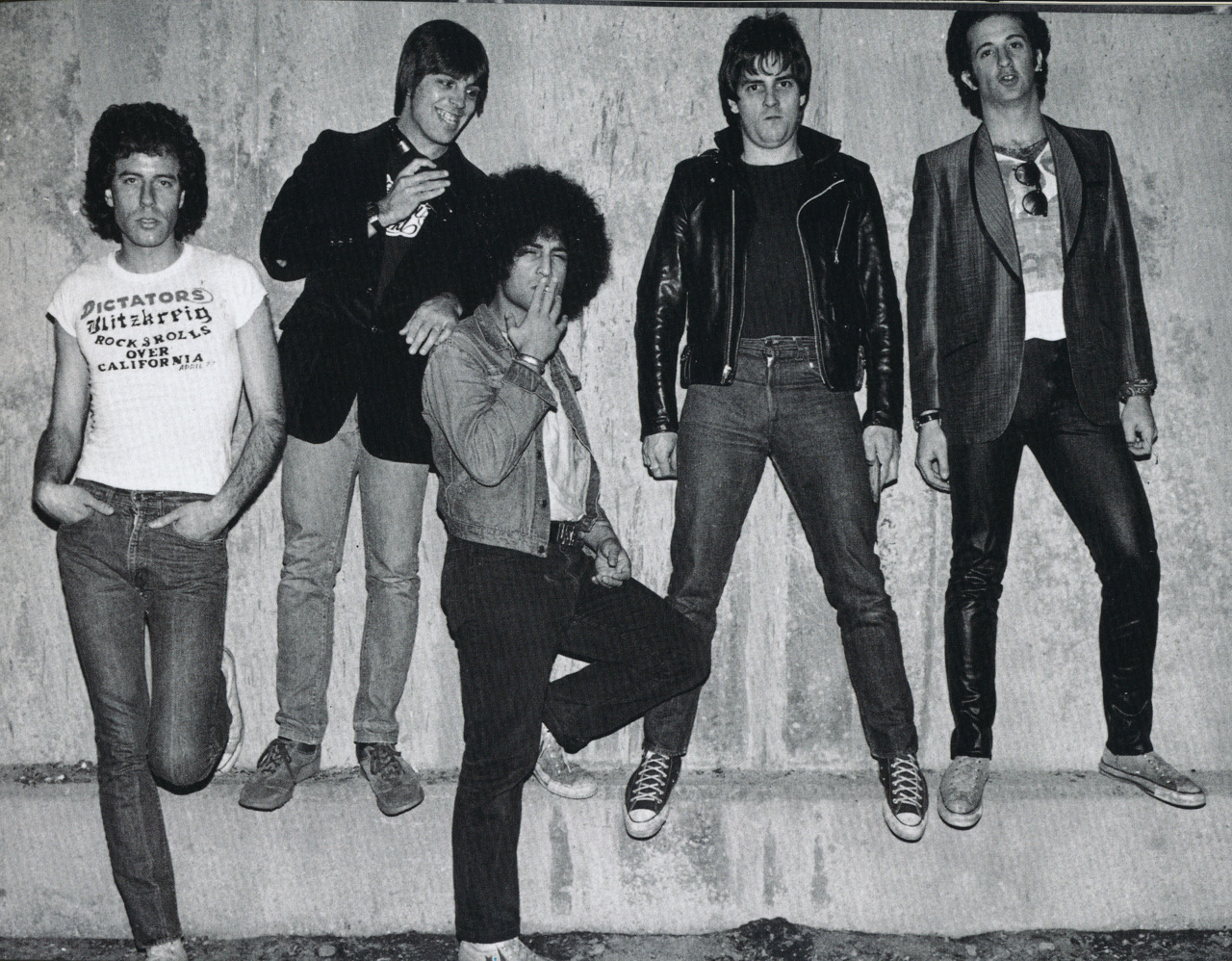 |
| The Dictators |
Punk rockers were reactionary Americans, mostly New Yorkers, who revolted against the dull, arty-farty, pretentious prog rock music peddled by Brits in America. Bands like Led Zeppelin played boring music with 20-minute drum solos, 15-minute guitar solos and incessant caterwauling-masquerading-as-singing that only pot smokers and acid eaters could love. As well, punk rockers revolted against the soft rock schlock sounds of Elton John, Paul McCartney, Van Morrison, Joe Cocker, Billy Joel, Neil Diamond, The Doobie Brothers, Boz Scaggs, Cat Stevens, Carole King, James Taylor, Eagles, the Carpenters and the like.
Arguably, prog rock started either May 16, 1966, with the release of Pet Sounds by the Beach Boys, or June 1, 1967, with the release of Sgt. Pepper's Lonely Hearts Club Band by The Beatles. Likely, prog rock peaked with Close to the Edge by Yes, released on September 13, 1972, or Dark Side of the Moon by Pink Floyd, released on March 1, 1973.
Beginning with Pet Sounds, musicians began to drift away from the rules of rock and roll. The Beatles' Sgt. Pepper's Lonely Hearts Club Band ushered in progressive rock, a kind of music that resembles rock and roll but it isn't.
Progressive rock arose from musicians who sought to compose long-form music using instruments and amplification from rock and roll music often combined with instruments from symphonic music such as timpani and gongs along with music synthesizers such as the Mellotron and digital synthesizer. Musicians began composing such music to appeal to LSD and marijuana drug users by experimenting with compositional structure, instrumentation, harmony and rhythm, and lyrical content. Prog musicians gathered inspiration from orchestral music and jazz.
Progressive rock featured motifs, extended musical passages, complex meter, contrapuntal bass, melodic bass, along with changes in tempo, key signature and meter. Prog rock lyricists relied on fantasy, folklore, J. R. R. Tolkien, medievalism, science fiction, New Age progressive spirituality, Dystopian themes, social commentary, ecology.
There isn't a musical form "punk rock." So-called punk rock is rock and roll.
Rock and roll music is music with simple meter (4/4) rhythm ostinato (riffs) played around either three chords (tonic, subdominant, dominant) or four chords (tonic, subdominant, dominant, submediant), regardless of arrangement (e.g., I-IV-V or I-vi-V-IV and so on). Rock and roll music gets played on electric guitar, electric bass, drums, often having vocal accompaniment, and sometimes upright piano or saxophone.
While there isn't any way to play "punk rock", there were punk rockers. Punk rockers were reactionaries against prog rock. Punk rockers arose in backlash against the overblown, pretentious, pompousness of prog rock musicians in what became the first great rock and roll revival. The definitive features of the punk rockers sound were playing uptempo straight rock and roll featuring overdriven guitars.
 |
| Johnny Rotten's "I HATE PINK FLOYD t-shirt" worn here by Steve Jones of Sex Pistols |
Those who were born around the birth of rock and roll (1952) and who were coming of age between 1970 and 1972 rejected the progressive rock sound and its demands of virtuosity. They longed to play the music they knew, music from their childhood, music released before 1966. Many took up instruments and began playing rock and roll again in defiance of the trend of progressive rock as well as the soft rock pop mostly coming from Los Angeles.
The early punk rocker bands were the New York Dolls, and The Dictators.

The Dolls put out two records in 1973 and 1974, with signature works like Personality Crisis, Vietnamese Baby, Trash, Subway Train, Babylon, It's Too Late, Chatterbox.
Malcolm McClaren, the clothing salesman and impresario who created The Sex Pistols like a boy band learned everything he knew to start The Sex Pistols from his association with both New York Dolls. In August 1973, McLaren and his girlfriend Vivienne Westwood came to New York City for a clothing trade show where they met Sylvain Sylvain of the New York Dolls.
Quotes from all involved say it all:
"The Sex Pistols were identical to the New York Dolls ... and they were identical in terms of their actions." ~Malcolm McClaren, creator of The Sex Pistols
"I was trying to do with the Sex Pistols what I had failed with the New York Dolls" ~Malcolm McClaren, creator of The Sex Pistols
"I thought it was great [New York Dolls first recording], just the rawness of it. And y'know Thunders guitar was what I really dug at the time." ~ Steve Jones, guitarist of The Sex Pistols
"Steve used to copy all Johnny Thunders moves ... he used to practise them." ~ Glen Matlock, founding bassist and major songwriter of The Sex PistolsThe band that actually inspired the magazine called Punk were a bunch of leather-jacketed wise-guys called The Dictators. The Dictators formed in 1973 and established a following at The Coventry, a club in Queens.
The Dictators from NYC had a record deal long before The Ramones. Joey Ramone attended many Dictators performances. Dee Dee Ramone would come to watch The Dictators play. The Dictators' works The Dictators Go Girl Crazy ('75), Manifest Destiny ('77) and Bloodbrothers ('78) feature some of the best return-to-rock-and-roll songs ever laid down on acetate.
Epic Records signed signed The Dictators in 1974 after Sandy Pearlman, manager and producer of Blue Oyster Cult, helped The Dictators record a demo. recorded , and The Dictators Go Girl Crazy! was released in early 1975
The Dictators inspired Legs McNeil and John Holstrom to found Punk Magazine. Holmstrom wanted to publish a magazine with Ged Dunn and McNeil. McNeil envisioned the magazine as a Dictators' album come to life.
According to McNeil,
“All summer we had been listening to this album [The Dictators] Go Girl Crazy! by this unknown group called the Dictators, and it changed our lives. We’d just get drunk every night and lip-sync to it . . . I hated most rock ‘n’ roll, because it was about lame hippie stuff, and there really wasn’t anyone describing our lives — which was McDonald’s, beer, and TV reruns.
So I thought the magazine should be for other fuck-ups like us. Kids who grew up believing only in the Three Stooges. Kids that had parties when their parents were away and destroyed the house. You know, kids that stole cars and had fun. So I said, ‘Why don’t we call it Punk?”
The word ‘punk’ seemed to sum up the threat that connected everything we liked — drunk, obnoxious, smart but not pretentious, absurd, funny, ironic, and things that appealed to the darker side ... And they both started laughing hysterically.
Ged and John were both like four years older than me. And I think half the reason they hung out with me was because I was always getting drunk and into trouble and Holmstrom found it constantly amusing. So it was decided I would be a living cartoon character, like Alfred E. Neuman was to Mad Magazine. And Holmstrom changed my name from Eddie to Legs
It’s funny, but we had no idea if anybody besides the Dictators were out there. We had no idea about CBGB’s and what was going on, but I don’t think we cared. We just liked the idea of Punk magazine. And that was all that really mattered.”
The Brit stuff borne of the late 1960s, such as Pink Floyd, Led Zeppelin, Genesis, Yes, and King Crimson, and so forth, none of that stuff is rock and roll. Those bands played long-form prog rock, which borrows instruments and some concepts from rock and roll. Long-form rock goes by many false, pretentious names like art rock, prog rock and jam rock.
As I showed you in A COUPLE OF AMERICAN JEWS INVENTED ROCK AND ROLL IN 1952, rock and roll started in 1952 by Mike Stoller and Jerry Lieber, a couple East Coast transplants to Los Angeles and big fans of West Coast Swing. American punk rockers created the great rock and roll revival.
The great rock and roll revival that began with the New York Dolls in 1972 ushered in the New Wave of Music, which included all of the then-new bands from the U.K. including the Sex Pistols, The Clash, The Damned, XTC, The Police, and many others.
Another notable early bar-band, Richard Hell, a guy inspired by the New York Dolls to take up a bass guitar and form a band, penned a song Blank Generation. Blank Generation was such an important song that Glen Matlock wrote the first Sex Pistols song, Pretty Vacant, using Blank Generation as his template.

