Thursday, April 16, 2015

CRAWLING FROM THE WRECKAGE INTO A BRAND NEW CAR, SLOWLY. AMERICAN CAR BUYING HAS COME BACK MUCH BUT NEEDS TO COME MORE.

Between the start of 1976 through the end of 2007, which coincides with peak True GDP and peak True Credit from the Greenspan-Bernanke Great Inflation, the biggest credit bubble in the history of mankind, there were 16.1 Free Americans age 16 and older for every new car sold in America. By Free Americans, I mean Americans living in the USA, not in prison and not institutionalized. The average over the last 6 months is still 1.18 times higher at 18.9 Free Americans for every new car sold.

The picture looks a bit better for Free Americans 20 to 54. From the start of 1976 through 2007, there were 10.4 Free Americans age 16 and older for every new car sold in America. Over the last six months, there were 11.1 Free Americans. 20 to 54, for every new car sold.

Until that long run average is hit, and stays steady, no one should claim the economy has recovered. As it is, True GDP keeps falling along with everything else.


Read more ...

Sunday, July 27, 2014

AMERICANS HIGH-SPEED RAIL FANTASIES AND THE TRANSPORTATION REALITY AMERICANS NEED

So while googling for something else, I came across this map on Upworthy detailing someone's fantasy for a nationwide high-speed rail network.


Americans already have a high-speed transportation network, likely the most advanced of all people. We call that network commercial aviation.

It seems quite silly to build faster versions of 19th century technology so Americans can haul themselves across great distances. It's already much faster to ride in a flown commercial jet than it is to ride in any high-speed train running anywhere on earth.

That said, perhaps there could be purpose for high-speed rail, if such rail were limited to one hour travel time between any terminals. With one hour rides, positive network effects can arise for commuters working in various nearby cities.


As can be seen, some cities in the USA are much closer together and thus lend themselves to being connected. It's unlikely that HSR could work for cities with population less than 300,000, though I included cities within the Top 100 by population.

Short-hop (one hour or less) HSR might be what Americans need to revive the fully rusted Rust Belt. In my vision, Indianapolis, Columbus, Cleveland, Toledo, Detroit, and Fort Wayne would become the Short-hop connected cities of the future.

The Great Lakes region is ready made for HSR. So too is the Southern Plains. HSR would work in the Mid-Atlantic, in Florida, in California, and in the Pac NW. Again, the right way is to run one-hour trains or less.

The political leadership behind HSR in California are doing it wrong, thoroughly so. The goal should not be to connect San Francisco with Los Angeles.

Already a robost high-speed infrastructure exists with flights between the many airports of greater Los Angeles and of the San Francisco Bay area. Letting many move into the San Joaquin valley to work in San Jose and San Francisco would be much smarter. Connecting Las Vegas with Los Angeles through Riverside would be much smarter.

The big question needing answer is who should own a nationwide HSR network and service? Most Americans fail to realize that when the U.S. Government owns something, in effect, that means the U.S. Congress owns it.

Taxpayers don't own anything, ever. Congress gives itself the right to a share of the wages of all wage earners even before they profit. Congress gives itself the right to a share of profits of all incorporated firms. Congress imposes duty upon wage earners and firms to pay Congress those shares under the name taxes.

If Congress owns the HSR, then Congress shall use the HSR for political purposes rather than for the betterment of all Americans, which is what the general welfare clause is truly all about.

Rather than Congress owning the HSR, Americans should own it, should it come to be. Each American 18 and older should be issued one share of stock in publicly traded HSR Corp. Likely, over time, most shares will end up in stronger hands. However, with an HSR Corp., Americans can be sure of efforts toward efficiency and quests for profits.

But will high-speed rail bring productivity gains to Americans and thus grow the economy beyond the initial outlay for track and trains? Rather than high-speed rails, perhaps Americans should better embrace a future of driver-less trucking.

In that future, perhaps U.S Interstates need to be cleared of passenger vehicles, at least those with drivers. Perhaps it's time to think upon a future where cars being restricted to U.S. Numbered Highways. Of course, interstate highways traversing cities couldn't be commandeered, but interstates spanning great distances ought to be reserved for driverless vehicles.
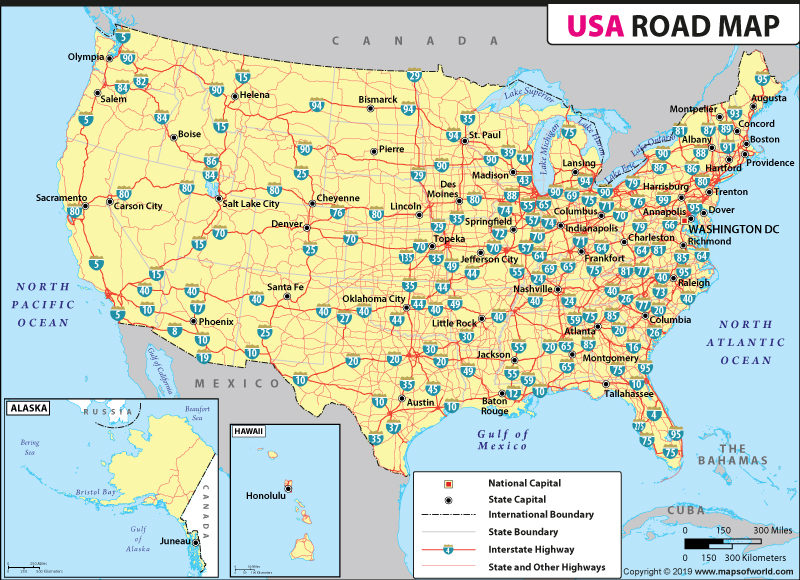
US Road Map

Already, Californians are being stuck with a massive bill, about $69 billion, for a pseudo high-speed rail foolishly planned to be built between Los Angeles and San Francisco.
Read more ...

Thursday, June 5, 2014

THE FANTASY PERFORMANCE OF BETTER CARS AND TRUCKS SALES HYPED THIS WEEK ON YOUR LOCAL BIZARRO THEATER STAGE

So the other day a staged performance went down across America on the stages of Bizarro Theaters everywhere. This time, the show was auto sales.


First, know that data reported on the stages of Bizarro Theaters were annualized. Annualized data made sense in the days of money (gold coin)  and an American population of farmers who had to wait to sell crops after harvest before securing income to buy things. In those days, so called country bankers sent deposits to New York City to earn interest before calling back those deposits as harvest time neared.

Today, farmers can get credit anytime to buy cars, trucks and vacations. As well, the percent of population involved in farming amounts to almost a rounding error of total population.

Nonetheless, the hype over auto sales data comes from a reported 16.8 million sales of cars and light trucks. This count is being touted as the fasted pace of sales since February 2007.

But what is the reality?  As I preach always, numbers are meaningless without context. Yet, on the stages of Bizarro Theaters, that is all you see, staged nihilism propaganda.

To understand what is going on, you need to see car sales in context of the civilian population, specifically the civilian non-institutional population aged 16+ and more importantly, the prime age work adults.

Let's have a look. To read these charts, the lows are the better numbers. The Drive ratios compare how many Americans there are for each new car and light truck sold.


Both the Drive 16 ratio and the Drive 25 to 54 ratios tell us something else. 


To remove the effects of the Greenspan-Bernanke Inflation Bubble, the largest credit bubble in American history, let's look at historical high sales average between the Nixon and Clinton presidencies. 

To match the historical high sales average between the Nixon and Clinton presidencies, monthly cars sales would need to grow a stunning 28.6% based on current population count of driving age Americans, 16 and older. Monthly car sales would need to grow a staggering 33.2% for prime age working Americans.

Now let's look at the Drive ratio for workers.


Monthly car sales would need to grow a staggering 36.9% for actual working Americans to match the historical high sales average between the Nixon and Clinton presidencies.

As a percent of GDP, motor vehicle sales look horrible. The Obama highs barely touch the Carter and Reagan lows Americans suffered between 1980 and 1982.


Read more ...

Saturday, August 17, 2013

ELECTRIC CAR GENIUS FOR EVERYONE. CONVERT ANY CAR INTO A HYBRID


This guy shames the failed bailed out General Motors and Chrysler as well as all of the other dopey car makers.

Read more ...

Thursday, August 15, 2013

RETRO FUTURE?

Is this the future of what cars might look like? Elio Motors of Louisiana plan to sell this Hollywood movie or Japanese anime futuristic car soon.

The 3-wheel Elio can hit 60 mph (96.5 km/h) in 9.6 seconds, cruise at speeds up to 100 mph (161 km/h) and get 84 mpg (2.8 l/100 km) city, 49 mpg (4.8 l/100 km) highway all from its eight-gallon (30 liters) tank that shall take you from Los Angeles to Provo, Utah on one fill up.

The Elio comes with a 70-hp, 3-cylinder engine, 5-speed automatic transmission and ABS brakes to haul you and a passenger who sits directly behind.

See more pics here.


Read more ...