Sunday, February 15, 2015

MARKETS EXIST ONLY BECAUSE OF PRIVATE PROPERTY. THERE ARE NO LEGIT MARKETS UNDER SOCIALISM OR COMMUNISM.

Today, in the comments on popular blog I read this whopper of silliness:

"Markets are created to establish prices."


Believing that "markets are specifically established to determine prices," forces one to believe that investors have plowed billions into distribution centers, stores, work hours of cashiers and stockers of a supermarkets chain merely to put food on shelves to display offers on shelf tags.  Of course, investors create supermarkets to trade property in food and other merchandise for property in cash and credit in purchases and sales.

The trading of property is the only reason why markets exist. In purchases and sales, individuals trade property, which is the right of ownership and never the things owned. Organized markets arise to facilitate purchases and sales of property for property.

Price quotation arises as an effect of highly-organized markets (think NYSE or COMEX). However, price quotation isn't a cause.

Price is a trade rate that reflects quantities in ratio.

Further, price results from expected future profit. For if no one believed he could earn income tomorrow beyond his expenses of eating, he would buy nothing today.

Academia economists with their pseudo-science of economics actually believe people exchange utilities for utilities. In their laughable theory, they believe a man will exchange only up to the margin of his satisfaction. Their comical theory is so incomplete that economists fail to consider that buyers also account for the bidding strength or weakness of the one with whom they are trying to strike a deal. 
The basis of commerce, which is what men do, is the trade of property in pursuit of profit.  
Read more ...

Monday, October 6, 2014

SHOT FROM THE SKY AND YOU'RE TO BLAME. YOU GIVE DRONE FLYING A BAD NAME.

CBS TV of Philadelphia reported that Russell J. Percenti of  Seashore Road, Lower Township, N.J., shot down his neighbor's drone helicopter in the lands of 80s big hair Bon Jovi after the unneighborly neighbor spied on Percenti by repeatedly flying the drone over Percenti's house. The unneighborly neighbor of Percenti called the cops who came and arrested Percenti on charges of both criminal mischief and possession of a weapon for an unlawful purpose.


In New Jersey, 2C:17-3. a. (1) and (2) defines anyone guilty of criminal mischief if that one purposefully or knowingly damages tangible property of another or damages tangible property of another recklessly or negligently in the employment of fire, explosives or other dangerous means.

Oddly, cops didn't arrest the unneighborly neighbor for trespass nor invasion of privacy. The unneighborly neighbor seems guilty of 2C:18-3. c. by peering into windows or other openings of dwelling places adapted for overnight accommodation.

Unfortunately, New Jersey law regarding invasion of privacy seems antiquated, offering no punishment in the era of privacy-invading drones and upskirt video perverts. New Jersey invasion of privacy law (2C:14-9) only accounts for video reproduction of any kind when the victim has exposed intimate parts or who is engaged in sexual penetration as well as sexual contact in which a reasonable person would not expect to be observed.

It shall be interesting to see what defense Percenti shall offer. Percenti's lawyer better conjure up images of imminent threat, like a pitbull wandering on his parcel.

Of course those in favor of drones invading the lives of everyone should like to see Percenti convicted and jailed. Anyone in favor of privacy and freedom should like to see Percenti walk.

In the USA, at a minimum, piloted flying machines must adhere to visual flight rules. Regulation requires a visual flight rules pilot  to "see and avoid" obstacles and other aircraft under minimum visual meteorological conditions.

There are two rules governed by FAA reg 91.119, known as the 500 feet rule and the 1,000 feet rule. An aircraft must maintain an altitude of 500 feet above the surface, except over open water or sparsely populated areas. When flying in the latter, aircraft may not be operated closer than 500 feet to any person, vessel, vehicle, or structure. An aircraft must maintain an altitude of 1,000 feet above the highest obstacle within a horizontal radius of 2,000 feet of the aircraft over any congested area of a city, town, or settlement, or over any open air assembly of persons.

Since drones are piloted, shouldn't drone pilots adhere to VFR rules as well as the 500 feet and 1,000 feet rules? Why shouldn't drone pilots be required to follow the same rules as other piloted vehicles?  Why should hobbyist drone voyeurs be exempt from FAA regs except on their own parcels of land in which they have property, which is the right of ownership?

Wars of all kinds always seem to be the drivers of technological advance. Likely, drones won't escape this. I can think of a future whereby homeowners have jamming devices, which broadcast signals to protect themselves from spying drones, which fly too low over their houses.

You can be sure that ever newer drones shall have ever greater flight capabilities with ever better cameras. Before long, drone voyeurs should have drones with zooming cameras flying at heights that let their drones go undetected. At some point in future, hobby drones shall fly overhead and you won't know it.  Their voyeur cams will zoom in on your face and see your zits. Their voyeur cams will zoom elsewhere and see your ...

It's hard to see the difference between those flying drones in public who engage in voyeurism and those who use video cameras to record upskirt videos of unwitting female victims.

Enjoy this confrontation between a drone voyeur and a beach nudist.


Read more ...

Tuesday, June 17, 2014

THE BURNING PLATFORM AND OTHER ZERO HEDGE CARNIES

Predictive doom is imminent, always, but never here. That is the carnival show trick of every doomsayer on the Internet today.

So, The Burning Platform came upon my radar today. The article I read has so much carnival show hokum that I became amused. Sadly, the comments reveal a slew of true believers to yet another doomster cult, the Cult of The Burning Platform.

Jim Quinn seems to be the name of the guy behind The Burning Platform.
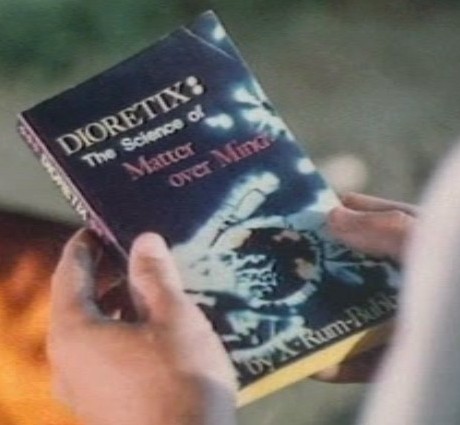
All cults feature these: a leader, new recruits, initiates, true believers, jargon, rites, rituals. It's most helpful for a cult to have it's own bible.

The bible of the Cult of Burning Platform, is a work titled The Fourth Turning by co-authors William Strauss and Neil Howe. The Fourth Turning is yet another in a long line of hokum works trading on the fearful who need to believe in something. According to Amazon.com, the work by Strauss and Howe mixes demographics with stories of history in effort to lure readers into believing that prophets Strauss and Howe have unlocked the secret code to predict all future acts of mankind.

Taken from Strauss and Howe bible, the jargon keyword for true believers of the Cult of Burning Platform is saeculum. The Etruscans were the first to speak the word. To the Etruscans saeculum meant the time from a founding event to the death of all those who were alive at the founding event. So back on February 7, 2012, when Florence Green died, the World War 1 saeculum came to an end as Ms. Green was the last surviving person to have served in WWI.

Supposedly, according to Strauss and Howe, history is not linear, but cyclical. One cycle corresponds to a saeculum. Within each saeculum, there are four "turnings."

Quinn, writes:

"A period of Crisis arrives like Winter, approximately 60 years after the resolution of the prior Crisis, with a climax occurring approximately 80 years after the prior Crisis climax. The generational dynamics based upon human life cycles have lined up once again into Crisis mode."

In true carnival palmistry, Quinn presents a table of saeculum to entertain his readers. According to Quinn, the Banking Crisis of 2008 marks the start of a two-decade long ever worsening "winter"  that shall lead to a "bloody climax."


Prophets push belief in cycles and in so doing, leverage what tricksters have known for hundreds of years — humans strive to see patterns in things, naturally.

In 2008, editor in chief of Skeptic, Michael Shermer coined the word patternicity to label the concept of finding meaningful patterns in meaningless noise. As founder of The Skeptics Society, Shermer investigates pseudo-scientific and supernatural claims.

In 1958, German neurologist Klaus Conrad described the onset of delusional thinking in psychosis when someone experiences delusion as revelation. Conrad called this mind phenomenon apophenia. The sufferer of an apophany believes he has gained insight, but that isn't so.

It's easy to cherry-pick a starting event for a saeculum, if one finds a convenient ending echoing ending event. Does the Panic of 1893 echo the Panic of 1819? Does the Wall Street crash of 1929 echo the Panic of 1857? Does the Franco-Prussian War of 1870 echo the War of the Seventh Coalition and the Battle of Waterloo?

In all my years, there has been continual crisis, from the Vietnam War to the Afghanistan War, from the Dollar Crisis that lead to the closing of the gold window to the Banking Crisis of 2008. Every year, there seems to be big-scale natural disasters of all kinds such as floods, hurricanes, earthquakes, tornadoes, droughts and big-scale man-made accidents of all kinds such as factory explosions, nuclear melt downs, ferry capsizings, passenger air craft crashes. And every year, there is war ongoing somewhere on earth. Days could be spent cataloging all of the crises — Fall of Saigon, Iranian hostage crisis, Black Monday October 19, 1987, Chernobyl, World Trade Center 9/11, Fukushima Daiichi.

To be sure to lure in readers, Quinn points out villains — evil wealthy men, bought-off politicians, paid-off media producers, shadowy "invisible government" — and all of their machination of disinformation and entertainment. To hook his catches, Quinn presents a long list of breads and circuses as proof of machination — toxic fast food paid for with forced taxpaying funded EBT cards, The Kardashians, Duck Dynasty, Twitter, Facebook, professional sports, and Hollywood movies. And like any fiery brimstone and treacle preacher, Quinn quotes chapter and verse from the The Fourth Turning, the bible of Cult of Burning Platform.

The word history enters into English during the late 1300s from the Old French estoire meaning relation of incidents whether true or false. The Old French estoire has its origins in the Latin historia meaning narrative of past events, account, tale, story; and ultimately from the Greek historia meaning a learning or knowing by inquiry; an account of one's inquiries, history, record, narrative.

Quinn says "History does not proceed in a straight line of forward advancement." Quinn seems to not know what the word history means.

Of course, history doesn't move ahead, take a course, proceed. History isn't about the future! History is about the past!


History is a man-made story telling about the past, a cherry-picking of documented facts from among all of the facts recorded and not recorded, told as explanation for such things already happened such as succession of power as well as the succession of ideas, embodied or not.

If anyone were to stop and then start to think about reality, all history reveals the struggle between appropriation versus acquisition. History is about the struggle for property, which is the right of ownership and not what is owned.

Said another way, all history reveals the struggle between men who engage in politics against those who engage in commerce. Politics is about war, taxation, confiscation, incarceration. Commerce is about voluntary purchases and sales of trade.

Ultimately, all history reveals the struggle between men who seek to rule by tribalism against those who seek to be free through individualism.

Hucksters of all stripes have sold countless works of prophecy. As it does for most things, the Internet has made it easier for hucksters to reach ever more who are desperate to make sense of everything happening around them. Zero Hedge seems like a carnival by publishing the works of many prophet doomsayers.

For my work on other doomsayers, check out Bizarro Theater Presents — Doomsayers!


Nostradamus and Tarot cards live on!


Read more ...

Thursday, May 8, 2014

WORK NEVER CREATES VALUE. WORK CREATES PROPERTY.

Recently, noted anti-banking blogger, Charles Hugh Smith wrote in The Changing Nature of Middle Class Work, "If we ask, what is work?, the conventional answer is tasks that somebody will pay us to do. This is true, but it doesn't address why someone is willing to pay us. The answer is to create value."

Charles Hugh Smith and all those like him perpetuate fallacy. The fallacy that work creates value is a variant of David Ricardo's labor causes value theory, which Karl Marx built upon his entire theory. 

As I show in BUT I SPENT 150 HOURS HANDCRAFTING THAT OIL ON CANVAS! OR THE LABORER'S SILLY THEORY OF VALUE, labor has nothing to do with prices. Prices get set by winning bidders. 

All prices adhere to the one and only true law of trade, the Law of Price — the winning bids of purchase and sale in the face of what is on offer sets the price. Prices get set by winning bidders who possess the means — these days legal tender cash or credit — in the face of what is on offer.

If no one bids for anything made, no matter how skillfully done, it's worthless. If bids are below cost, oh well. That is an signal that most everyone in a society of property deem the work worthless and a waste of resources. 

The entirety of trade, or commerce, or real economics ties up with two words — property and profit. Without profit from effort, anyone would lack buying power to buy anything else. Without property, no one can trade. 

Though most think of property as things possessed, property always has meant the right of ownership and never the thing owned. Only when property gets created, can trade arise between two persons. 

The name for property put to making stuff is called capital. The name for property put to purchase and sale for cash and credit is wealth. 


Work is expressed skills through time. Work becomes the wealth of the laborer when traded away in a purchase and sale. Why someone pays for work is to gain property in that work. 

Cash and credit in the form of wages becomes the wealth of the employer when traded away in a purchase and sale for wealth of the worker, which is her work.

In a purchase and sale, work is what the laborer sells and wages in the form of cash or credit is what the laborer buys. 

Until an employer gains property in the effort of an employee, which we call work, the employer cannot do anything with that work. Taking possession of something without having property in something is called theft. 

Work of a laborer is no different than computer chips made by robots in a factory. Both are components of a larger product. 

The manufacturer of smartphones with computer chips does so in quest to trade away at profit, property in smartphones for property in cash or credit.

Value does not mean usefulness. Value is a ratio. Value is the ratio of one thing for another. The ratio of exchange, that is, the rate of exchange, or said as the exchange rate, is the value. 

When one two things in a purchase and sale is cash or credit denominated in cash, value gets called by the word price. Value is the quantity of what is acquired in a purchase in sale over cash or credit denominated in cash given up in that purchase and sale.  

So, 6 oranges for $1 is the value, written as 6 oranges / $1. 6 oranges together is a trade quantity. $1 is a trade quantity. 

Stuff doesn't have value. Stuff makes value. Value is a ratio of one thing for another in actual trade. Value arises from valuation. Always, value is a ratio expressed as one thing traded for another. 

Value arises solely in the moment of trade. When one of two things in trade is cash or credit, we give the word value another name. We call it price.  

Value results from reciprocal desire to gain property from whatever causes in the minds of those involved in the trade. 

To someone, she might sell $8 and buy a hamburger and a milkshake. To someone else, he might sell $8 for a six-pack of beer.  

Even though their subjective desires differ with respect to the same sum of cash, $8, any outside observer can observe objectively value in either transaction, one burger and shake for $8 as well as one six-pack of beer for $8. 

There is no other cause for price (value) than the quest to gain control of property. No one can realize profit gains without property owing to being among a society of property. No one can derive the usefulness of goods before possessing those goods.


Read more ...

Tuesday, April 29, 2014

HOOVER DIDN'T SPEND ENOUGH! A MEME BORN IN A VACUUM, EMPTY OF REALITY, BELOVED BY THE FOOLISH EVERYWHERE.

Once again in my life, I came across the oft-parroted false meme "Fretting over its cost when capital and labor are plentiful is Hebert Hoover economics," which is another way of saying Hoover didn't spend enough. Today, I read that expressed foolery over at Bloomberg.com.

In case you don't know, Herbert Hoover was President of the United States between the years 1929 and 1933. Hoover is the guy the Ph.D. priests of Academia Economics like to blame for the Great Depression rather than the guy they should, President Franklin Delano Roosevelt. 

Of course, Roosevelt was president who criminalized money by confiscating gold from Americans, and thus the guy who forced Americans into the legal tender cash system of the Federal Reserve.

Owing to party politics, Hoover nailed the job as the U.S. Secretary of Commerce under President Calvin Coolidge. President Coolidge said of the chronic meddler Hoover, "That man has offered me unsolicited advice every day for six years, all of it bad." 


Of course all should realize that Congress and not any President decides spending; and that Hoover signed in law massive spending increases during his term in office.

According to the Office of Management and Budget of the U.S., Hoover inherited the 1929 budget from Congress, which decreed federal spending at $3.1 billion. In the following years, Hoover signed into law, spending that increased to $3.3 billion in 1930, $3.6 billion in 1931, and $4.7 billion and $4.6 billion in 1932 and 1933. Over his four years, Hoover increased spending a whopping 48%! As a percentage of GDP, Hoover agreed to almost triple spending between 1929 to 1933, from 3.64% to nearly 9%!

Throwing out the crazy 1862-1865 war spending of the war-mongering Lincoln and the 1918-1919 war spending of the war-mongering Wilson, between 1792 and 1929, average Congressional spending as a percentage of GDP calculates to a scant 2.62%.

Taken from the National Bureau of Economic Research, Wikipedia lists 33 recessions after 1792 start with the Panic of 1797 up until the Great Depression. 


There is no correlation between Congressional spending and whether Americans experience recession or expansion in their economy, none. Recessions hit both after periods of increasing spending by Congress as a percent of GDP and decreasing spending as a percent of GDP. 

Recessions are periods of reckoning after the growth of credit outstrips the growth of output owing to credit being priced too cheap, or that which we call inflation, and profits fail to materialize. When enough discover that receivables cannot get collected and payables cannot get paid from income on sales — the profit squeeze — crisis arises.

Many come to see they cannot afford to stand losses formerly sustained in lines of business and thus shutter those lines. Efforts get underway to kill off all those firms unworthy of credit and whose existence constitute a standing menace to legitimate business enterprises.

Recessions are resultant of bad credit practices, especially by bankers. The residential realty bubble of the 2000s is a period of inflation that led to widespread bankruptcy because enough became incapable of servicing debt owed on extended credit.

The speculative expansion of inflation leads to the need to adjust credit lower through forced credit liquidation, which results in declining valuation of assets and a lessening ability to meet outstanding credit obligations. 


Academician economist priests all preach in their Temples of Academia that government spending is the key to bettering an economy.  However, they state their claims upon the false premises — utility and scarcity — of the pseudo-science of economics. 


Paul Krugman, the public face of the Economics Temple of Academia forever pushes the false Hoover meme to support his false beliefs that increased government spending is the key to a better economy. If Krugman's claims were true, then how can Krugman explain why between 2007 and 2014, Congressional spending as a percent of GDP has averaged 21.65% and yet most Americans have seen no improvement in their financial affairs.


In WHY IS THE ECONOMY SO HORRIBLE? BECAUSE ACADEMIA ECONOMICS IS FAKE, I reveal property and profit as the basis of all trade, also said as commerce, or what is authentic economics. 

In the end, credit is the means by which property, which is the right of ownership and never the thing owned, gets called into existence. When more property gets called into existence than profits arise for which to pay for new property, the debt duty owed to credit cannot get paid.


Read more ...

Sunday, April 27, 2014

WHEN YOU CAN SNATCH THIS PEBBLE OF TRUTH FROM MY HAND, TIME FOR YOU TO BECOME FREE


This one line of dialogue spoken by Kwai Chang Caine, Shaolin monk, in the episode Superstition (Season 1, Ep. 12), sums up the current state of Americans quite well.

Many Americans pay outrageous sums of taxes, on income, on purchases, on cars, on parks and much more so that many other Americans can pretend to work at overpaid government jobs and others still can collect all manners of welfare while they feign one weakness or another.


In my nipper years, I watched Kung Fu, an action-adventure western with a Taoist mystic vibe starring David Carradine as a Jesus-like Shaolin monk named Kwai Chang Caine who wandered the American Old West in search of his long-lost brother. 

To set up the show, Caine, the orphaned son of an American man a Chinese woman living in China, gets accepted into a brotherhood of Shaolin priests.  In this Shaolin monestary, Master Po becomes Caine's beloved a mentor and elder. When the Emperor's nephew indiscriminately murders Master Poe, Caine loses his self control in a heat-of-the-moment reckless reaction and murders the nephew.

With a price on his head and at the urging of a dying Poe, Caine flees to America to save himself. While in America, Caine faces a series of tests enduring the hardships of prejudice, stupidity, greed and violence.


Easily, Kung Fu the original series is perhaps the only fictional show ever aired that could make anyone think and perhaps better himself or herself.


Read more ...

Tuesday, April 22, 2014

THE PROPERTY-DESTROYING VIOLENCE OF NET METERING

Today, in Forbes, Tim Worstall typed a piece advocating an end to net metering.

Worstall supports the silly, faux argument that solar consumers "don’t pay to maintain the power grid." Worse, Worstall dresses that silly argument in the fallacy of appeal to emotion by claiming "they’re not paying their fair share of ... fixed costs."


Net metering ought to end, but not for the lame argument that Worstall makes. Net metering ought to end because such arrangement abrogates property of electricity firms and their freedom to contract.

Suppliers of oil, coal and of natural gas to electricity generators don't pay to maintain the power grid. Yet, no one argues that electricity firms ought to have the right and thus oil, coal and natural firms should have the duty to pay for the costs electricity firms incur to transmit electricity from plants to cities.

Instead, electricity firms buy oil, coal and natural gas to fuel their plants. Firm execs decide what fuel sources to buy depending upon market prices and what fuels their plants can burn.

Because of net metering, residential and commercial customers who generate excess electricity from solar installs supply already-generated electricity to electricity firms whose executives are required by law to buy.

Worstall's silly claim that those with solar only contribute to overhead when sucking power off the grid is akin to saying that if you only shop in Kroger's, Safeway or Publix once a month, you are contributing to the overhead of their physical stores, but you don't buy enough for those firms to profit upon you, thus you should be banned from shopping at all at those stores.

In trade, all firms get held to the great Axiom of Profit and the infrangible Law of Prices. The Axiom of Profit holds the sum of sales must at least equal the cost of production otherwise firms go to ruin. The Law of Prices holds the winning bids of purchase and sale for what is on offer set the price.

The sum of sales for electricity sellers comes from rate payers and not from suppliers of fuel used to generate electricity. It is from the sales of electricity to rate payers that electricity-selling firms pay their expenses. If they have planned their businesses right, they might break even.

A better argument to end net metering would be thus:
  1. Executives of electricity firms cannot know how much solar install exists at any time, nor can these executive know how much sun shall shine over a futures contract period for oil or natural gas, nor how efficient the production of electricity from solar shall be during this period. 
  2. Times of solar abundance pushes higher the true price electricity firms have paid already for oil, coal and natural gas, thus increasing costs and reducing the likelihood of break even.
  3. Thus, executives cannot forecast and mitigate risks to insure break even. 
  4. Therefore, executives should not be forced to deal with commercial and residential customers who wish to sell their excess electricity to their local utility.
Wal-Mart execs aren't forced by law to buy products from any wholesaler nor any manufacturer. No franchise in the NFL is forced to draft any player nor contract with any player. Forcing any electric utility to do the same violates their freedom of contract, freedom of association and their property in capital and property in wealth.

Worstall makes his silly argument based on the faux science of economics. In WHY IS THE ECONOMY SO HORRIBLE? BECAUSE ACADEMIA ECONOMICS IS FAKE, I show how trade of property for profit is the only basis upon which anyone can discuss trade or commerce or authentic economics.

Americans need to come to understand that there isn't "The Grid." "The Grid" is pure fiction that politicians spin on behalf of electric utilities hoping to get Americans to subsidize the capital of these firms, thus increasing their unearned profit.

There are firms, which sell electricity to residential and commercial customers. There are firms, which own and operate high voltage transmission lines connected by towers. There are firms that own electrical generation power plants, which buy the services of transmission-line operators in the same way that manufacturers hire long-haul truckers to haul goods to wholesalers and wholesalers hiring the same to haul goods to retailers. In the past, firms did all three — generate, transmit and sell.

Americans do not own "the Grid" in the same way that Americans do not own the U.S. Interstate highway system. Congress owns the U.S. Interstate highways.

Congress imposes the duty on you to pay taxes for the Interstates. Congress gives itself the right to collect taxes from you. Congress gives you the right to travel the Interstates. Congress imposes the duty upon itself to let you travel the Interstates.

Firms run transmission lines from more than one power plant, which are the sources, to the same city, which is the sink. This is done to ensure that electricity stays running in case of failure at any power plant.

If you don't know what net metering is, the Energy Policy Act of 2005, a federal law, requires all public electric utilities to facilitate net metering to their customers upon request.  Net metering requires electricity firms to accept electricity generated by commercial and residential customers through renewable methods, such as solar panels, and then reduce bills of these customers by the amount of electricity they have generated.

If you don't know what property means, property means ownership, a bundle of rights — right for possession (Jus Possidendi), right for using (Jus Utendi), right for destroying, alienating (Jus Abutendi), right for recovery when found in the wrongful possession of another (Jus Vindicandi).

Property means the right of ownership and never the thing owned.

Read more ...

Sunday, April 20, 2014

THE GREEDY ARE THE ONLY PROBLEM THE WHOLE EARTH OVER

Everyone is free to read these facts that I present, facts interconnected in accuracy and defensible through bulletproof logic. 

Those who accept these 15 points understand adult life and much of what adult life entails — power, control, politics, governance, property, property as capital, property as wealth, work, trade and profit. Those who fight against these 15 points above suffer from cognitive dissonance and thus likely try to defend false beliefs inculcated into their hyper-indoctrinated minds.


  1. Society consists of strangers who engage in trade of property.
  2. A society of property is the only kind of society that can arise among strangers, each who pursue self-interested goals.
  3. Property means right of ownership in things and not things owned. Property is a bundle of rights  — Jus Possidendi (right for possession), Jus Utendi (right for using), Jus Abutendi (right for destroying, alienating), Jus Vindicandi (right for recovery when found in the wrongful possession of another.
  4. When property gets put to use to make more property, the name for such property put to use is capital.
  5. When property made from capital gets traded in purchases and sales, most often for cash and credit, the name for such property is wealth.
  6. Labor is the working man's capital. Work done is the working man's wealth, which she or he trades for wages, most often in the form of bank credits and less so for cash. Wages paid is wealth traded away to hire work.
  7. Bank credits and cash constitute buying power.
  8. Buying power is the means by which anyone can acquire the wealth wanted after selling away wealth produced in surplus and not wanted, whether that wealth is embodied in a finished product or work through time.
  9. It is greedy for anyone to seek buying power without producing wealth in surplus that others are willing to trade to get in a purchase and sale, under condition of honest dealing.
  10. As a creation of strangers of a society of property, government is supposed to exist only to protect any individual at random and his property from a mob, whether foreign or domestic, from stealing his property unjustly. 
  11. Today, government, the creature, has superseded its creators. Men of government through law impose duties and rights upon strangers in society of property and well as themselves acting as the government.
  12. Some of those duties include paying income taxes. Some of those rights include fulfilling greedy desires. 
  13. Men of government through law grant rights to fulfill greedy desires as a means to secure and enlarge their grip on power. The more who are dependent on welfare and subsidy for their livelihood, the more support they give to those holding power.
  14. Expressions of right in fulfilling greedy desires include welfare taking and subsidy taking. Specific examples include recipients of TANF, SNAP, Section 8, Medicaid, Medicare, Social Security, farm subsidies, Pell Grants, all workers of agencies engaged in doling the former as well as all workers in agencies regulating industries, which inhibit new entrants through inhibition of capital formation. Such agencies include the FDA, SEC, FAA, FCC.
  15. Men of government through law impose liability for those who operate outside the framework of subsidy and welfare to fulfill their greedy demands. Thus, through liability, anyone is free to pursue right of action in civil fraud. Men of government reserve to themselves right of prosecution in criminal fraud.

Every right minded, straight dealing person knows that to get property, which is the right of ownership and never the thing owned, in anything, a person ought to acquire such in a purchase and sale with the current holder of property by trading cash or credit for property in whatever is being traded.

Everyone who has a sense of right and wrong knows that it is wrong to try to get something for nothing. And that is what the greedy do. 

That is the picture perfect definition of greed — striving to get something for nothing from someone else, without giving up something wanted in honest exchange or in honest trade of purchase and sale. Greed is wanting property in stuff without having to trade for such fairly. Greed is striving to get something without giving up something wanted by someone else in an honest exchange.

The word greed came into English about 1600, making it word of a Middle English. It is a back formation from the West Saxon word greedy, which makes that an Old English word.

Greedy is the Old English word meaning covetous. The word was used for the Greek philargyros meaning money loving in Christian religious translation tradition.

A covetous person would be one who is painfully desirous over another's advantages. Such one would seek any means to acquire those advantages without having earned those advantages honestly.

Being greedy is being envious of others who are rich and successful and driven by that envy, striving to get something, often buying power — cash, bank credits — for nothing — doing no work or not doing legitimate work. Every right-minded, straight-thinker of sound mental health would agree.

Getting welfare, getting subsidy, swindling people by fraud — all accurately express the concept of greed. Welfare takers, subsidy takers, fraudsters, all share one driving trait, a trait that nullifies character within them. They are all greedy to the core.

Seeking welfare instead of work, accepting welfare and then never paying back for that welfare is greed. Welfare collectees, subsidy seekers, fraudsters — all are greedy.

Bernie Madoff was greedy. He swindled people of their bank credit, technically, so he could get rich without having to give up in trade, honest services of earning profits trading stock.


Madoff committed fraud because he was greedy, which is another way of saying Madoff wanted something — other people's cash and credit — without trading for it — selling them stock portfolio services that would lead to honest profits.

Welfare collectees are the same as Bernie Madoff. They want free rent and free food for their entire lives without working. The common denominator between Madoff and welfare collectees is that both are greedy — they both want something — buying power — without giving up anything in honest trade — work.

When do you see welfare collectees quit welfare, work and pay back taxpayers for welfare they collected? Those who aren't greedy would do so. Anyone who gets off welfare and gets a job, paying income taxes fails to pay back for past greedy welfare collecting. Instead, they pay forward for future greedy welfare collectees.

Work is the honest trading of skills through time, of course.

Those who live by capitalism in an honest manner never are greedy. There is no greed in honest capitalism. Never is there greed in authentic capitalism.


Capitalism means living by putting property to use, which is capital, to produce property for trade, which is wealth. 

Producers deploy automation questing for efficiency. Efficiency can let producers accept lower winning bids for what is on offer while maintaining profit margin.

Whether produced with automation or not, products traded for cash or bank credits is still honest trade. Producers who use automation are not getting something — buying power in the form of cash and credit — for nothing — not selling product.

Wealth only arises from trade, of trading one kind of wealth, often cash or credit, for another kind of wealth, property in a product arising from property in production, which is capital.

Those knowingly who make shoddy products selling such products without revealing defects to trusting ones are greedy.

Freedom is the realm where a man or woman is self-sovereign. In freedom, anyone has liberty. Liberty requires government. 

Anyone has duty, in truth, only to those that one brings forth among the world. Strangers have no duty to each other and no stranger has an inherent right to anything from anyone else that doesn't arise from mutual consent.

Forcing people to surrender their living for others is mere savagery regardless of how self-deceiving the rhetoric is. As long as people demand that persons get forced to pay income taxes or face imprisonment to pay for welfare and subsidy, no one can be free. 

In representative democracies, without power, politicians couldn't cause all their wars and all of the mass murder that goes on with their wars. In representative democracies, politicians only can gain power by doling out welfare and subsidy to the greedy who surrender their individual power and sovereignty to politicians in exchange for unearned buying power.

[ See: 20th Century Murder by Government Democide ]

Greedy welfare takers and greedy subsidy takers are the problem. The problems are Crony Politics, Crony Governance and Crony Regulatory Capture. The problem rests in politics and governance rather than people in pursuit providing wanted products efficiently.


When trade is not hampered by artificial restriction of supply, nor inflated by artificial giving of buying power, the righteousness of free markets prevails. Only through markets free from Crony Politics, Crony Governance and Crony Regulatory Capture can all benefit owing to efficiency.

Peace and prosperity come to a society of strangers when each one gains self-enlightenment, self-actualization, by rejecting greediness in oneself and by rejecting calls by the mob to use forced against anyone as the means to satisfy the greediness of those of the mob.

To help you more, read these fast reads:


Read more ...

Thursday, April 10, 2014

REAPING DAY APPROACHES. THE REAPER COMES TO REAP YOU. ANOTHER TAX DAY IN AMERICA COMES.

Income tax on wages is an ongoing sales tax on the product of capital of any wage earner. Said another way, income tax is a series of sales tax levies on wealth traded between wage earner and employer.


Income taxes levied on work sold means that you, the worker, have no right to work. Yet, if you work, you have a duty to yield an unearned share of your profit with politicians who have not invested in your personal enterprise, yourself. Politicians have given themselves the right to an unearned share of your profit without investing in you.

If the requirement for work is paying what amounts to a toll, a fine, a penaltax, are you free?  Can you look at yourself in the mirror and claim to be free?

As I explained in WHY IS THE ECONOMY SO HORRIBLE? BECAUSE ACADEMIA ECONOMICS IS FAKE, the entirety of trade, or commerce, or real economics ties up with two words — property and profit. Though most think of property as things possessed, property always has meant the right of ownership and never the thing owned. Only when property gets created, can trade arise between two persons.

The name for property put to making stuff is called capital. The name for property put to purchase and sale for cash and credit is wealth. 

Labor (skills, body) is the wage man's capital. The work of the wage earner is his wealth. The wage earner sells work, which is the embodiment of his skills and muscles and buys wages, which are bank credits, most often in the form of deposits, but sometimes in cash.

Incorporated firms face an alike tax as wage earners do. However, all taxpayers, who cannot shift their otherwise compulsory tax burdens upon others, subsidize the capital of incorporated firms since the rules of law let enterprise-adventurers write off capital, sometimes as direct expenses and sometimes as depreciation expenses. In short, for incorporated firms, any profits earned get earned on eventually free-to-them capital.

Wage earners get shafted because they lack deduction on their capital. Wage earners cannot write off legitimate expenses such as food, which is energy for the mind and for the body; clothing and rent, which are shelters for the body and mind; transport, which is how wage earners bring to market (their workplaces) their wealth for sale (their work); medicine, which is how wage earners restore damaged bodies and minds; fitness, which is how wage earners educate their bodies; and skills acquisition, which is how wage earners educate their bodies and minds.

Even farmers get to write off all expenses to feed their cattle, to transport their cattle to market, to get medicine into the bodies of their cattle. Even farmers get to write off as depreciation, all barns to house their cattle, all vehicles to transport their cattle. Are you prized less than a Jersey cow? 


The purpose of government is to facilitate justice for a society of property, which is the only society that can form and be among strangers. As I explained in LAW VS JUSTICE. GOVERNMENT VS SOCIETY. POLITICS VS YOU, the only legit reason for government is to protect the individual and his property from a mob and to certify claims about property when in a society of property so that men can engage in trade, which is the purchase and sale of property, rather than war among each other. 

Government isn't supposed to exist to provide jobs for unionized government workers nor for contract workers. Government isn't supposed to exist to provide guaranteed income for welfare collectees. Government isn't supposed to exist to provide contract work and unearned profits, which ends up being little more than largess. Government isn't supposed to exist to create barriers to entry against competitors, thus insuring unearned profits for cowards who can't compete. 

Government isn't supposed to exist to guarantee profits for farmers. That is why futures markets exist.

Yet, all of the foregoing describes the government of the United States of America today as well as the state governments of all 50 states. Through the force of government, many Americans are beggaring many other Americans.

For many decades now, Americans have not lived among a society of property. Instead, Americans live among a society of law-legitimizing thieves, Americans who hide behind wicked, deceptive rhetoric such as "it's your duty, it's for children, it's for the homeless, it's for women, it's for the elderly, it's to protect you against the terrorists."

In 1726, English trader and pamphleteer, Daniel Defoe wrote in his Political History of the Devil, 


Things as certain as Death and Taxes, can be more firmly believ'd

In the episode Two Minutes to Midnight, of show, Supernatural (Season 5, 21), Dean Winchester sits down to share a pizza with Death, aka the Grim Reaper. It's hard to see those of the IRS as little different than one of the Four Horsemen of Congress and the political establishment of the U.S.A.


Read more ...

Thursday, January 30, 2014

BUT I SPENT 150 HOURS HANDCRAFTING THAT OIL ON CANVAS! OR THE LABORER'S SILLY THEORY OF VALUE.


The story shown in the picture below is typical of most who, though, constrained by reality, fail to see reality. Thus, they suffer. Their faces emote their anguish much like the old woman painted by the Dutch master, Rembrandt.


Though the story is touching, it's fallacy. The fallacy is Ricardo's labor causes value theory, which foolish socialists like Marx took up. The fallacy was put to bed more than 160 years ago.

Labor has nothing to do with prices. Prices get set by winning bidders. 

Take two people. One can spend one million dollars buying equipment and mining rights to mine for gold and after all that effort only find an ounce of gold. Another could find gold while walking spending exactly nothing. 

Is the ounce of gold worth a million because that is what the miner paid, what it cost him to get? No!

Right now, both the miner and the finder could get $1242.80 (as of 2014.Jan.30) for selling that ounce and that much alone. Why? The price gets set by winning bidders against all gold on offer for sale right now.

The miner put in time, effort, dedication, smarts, training, and much more. The finder put in nothing.

Or say someone has inherited purported fine-crafted gold jewelry from a dear lost relative and melted that jewelry down to support a meth habit, the gold in that jewelry would fetch at the same rate of all gold, $1242.80 an ounce. Once again, no outlay was made for that gold coming into the methhead's possession as property.

All prices adhere to the one and only true law of trade, the Law of Price — the winning bids of purchase and sale in the face of what is on offer sets the price. Prices get set by winning bidders who possess the means — these days legal tender cash or credit — in the face of what is on offer.

If no one bids for anything made, no matter how skillfully done, it's worthless. If bids are below cost, oh well. That is an signal that most everyone in a society of property deem the work worthless and a waste of resources. The artist should find other work.

Labor is the poor man's capital. The expression of skills through time, which is called work, is a product.  Labor is the outlay to turn something into property and nothing more. Only things of property can be bought and sold in purchase and sale for cash or credit.

Trade is predicated on property and profits and not effort and skill. Anyone must gain property, which is the right of ownership and never the thing owned, before enjoying or possessing a thing. If anyone fails to buy something to gain property in it, but instead takes it, that is called stealing. 

Anyone can buy stuff because that one has produced profit (earnings) in past and has been rewarded or others expect another shall produce profit in future, which we call confidence, and thus give credit to another. 

Profit arises because of property others want to possess under the constraint of the great Axiom of Profit —  the sum of sales must at least equal the cost of production, otherwise the producer goes to ruin. And of course, the sum of sales arises from the quantity of things sold times price. And price gets set by winning bidders of purchase and sale in the face of what is on offer.

So the whole trick of producing property in pursuit of profits is to produce what others want, to be in service to others. And that is what being in society of property is all about,  the only society in which strangers can live, even when government has grown to take control of that society and has distorted all relationships of man with man in society of property.

If labor were what caused price, then why can Apple earn a premium on iPhones relative to all other touch screen phones? Why aren't Apple execs accepting bids ( charging ) for what it cost them to get the phones made? 

If labor set prices because cost were to be the cause of price, then why does anyone go out of business? Labor has nothing to with price. Prices get set by winning bidders who must first gain property in something before they can use it.

No one works at a loss (Wages - Living Expenses or Sales - Outlay) unless politicians swoop in and subsidize that one with Section 8, SNAP and the like. When politicians give  workers welfare to subsidize their living, in effect, politicians subsidize firms that can pay wages precisely because of welfare given to workers (see: GREEDY CAPITALIST COMPLAINS ABOUT UNEMPLOYMENT INSURANCE EXPENSE AND QUITS HIS BUSINESS and Wile E. Coyote, Campground Businessman Super Genius).

Any worker gets paid to produce. His or her wage arises against the lack of willingness of another slightly better and smarter, who absent what she or he is doing, could bid lower than the worker being more efficient at living or could bid higher than the worker being able to produce more in any time span.

All the same, prices get set by those willing to cough up the cash or credit to buy. Sellers must accept those bids to get sales. Would-be sellers can refuse those bids and earn nothing. They can hold back inventory in hopes of future bidders bidding up prices.

People fail to appreciate the role of marketers and those in advertising who help to present products to those who most willingly can appreciate how a product can fit within their lives.

Marketers are quite like commodities speculators in the respect of pushing prices along to keep prices high enough so that manufacturers, be that automated or hand-crafted, can live to make another day, and yet against each other, low enough so that many can enjoy the fruits of others.

It's too bad that many perceive, wrongly, that marketers are "middlemen" who are little more than tricksters and knaves. Marketers keep people in business.

The successful stick to their knitting as it were and hire marketers to get them the best price possible. The reward for doing so is a share of the increase.

To savages, a Rembrandt likely would be worthless compared to spears. The savage wouldn't know he could sell the Rembrandt to someone who would esteem it and buy thousands of spears.

Yet, where art gets esteemed by others, it is the winning bidder who sets the price for a Rembrandt as nothing in trade ever can violate the Law of Price, the same as nothing can violate the Laws of Thermodynamics or the Law of Gravity. So even a one-off like a famous artwork sells, not because of purported scarcity, but because someone else has property (right of ownership) in it.

The price of a Rembrandt arises not because it is rare (scarce), but because of rivalry of bidders, only one of whom can win with the highest bid precisely because that one has the most cash or credit, which he is willing to sell in a purchase and sale, to buy a Rembrandt. 

Egghead Ph.D. academicians, who call themselves economists, long ago realized the error of Ricardo. Rightly, they came to see that labor is not the source of value (price). Yet, the next round of economists decided to commit their own fallacy and from which they base their entire myth of economics, that of scarcity and utility cause value (price). See my work WHY IS THE ECONOMY SO HORRIBLE? BECAUSE ACADEMIA ECONOMICS IS FAKE to discover in less than 3 minutes, why economics is bogus, a myth, a b.s. story.

Utility as a source of price (value) is quite false as it imbues into things intrinsic value. Scarcity as a source of price also is quite false. 

The earth is awash in water, but men are successful sellers of bottled water right next to giant lakes and rivers. Why can do they do so? Bottling creates property. 

Many would believe that a Rembrandt is worth much because he is dead and thus can not make any more. So any Rembrandt is a one-off. Yet, millions have watched and learn to paint from Bob Ross, each creating their own one-offs. Each one being unique makes each one scarce. Each Joe Blow also is a one-off. 


Yet, no one trawls garage sales bidding outrageous sums for the one-offs of the Joe Blows of our world. 

And so, because economists believe from false premises, their conclusions are false, necessarily so, even when remaining logically consistent from false premises to false conclusions. It doesn't matter if that neoclassical school is the Keynesian school or the Austrian school. 

There is no escaping reality. Anyone can only deny reality. 

Enjoy some Rembrandt!


Read more ...